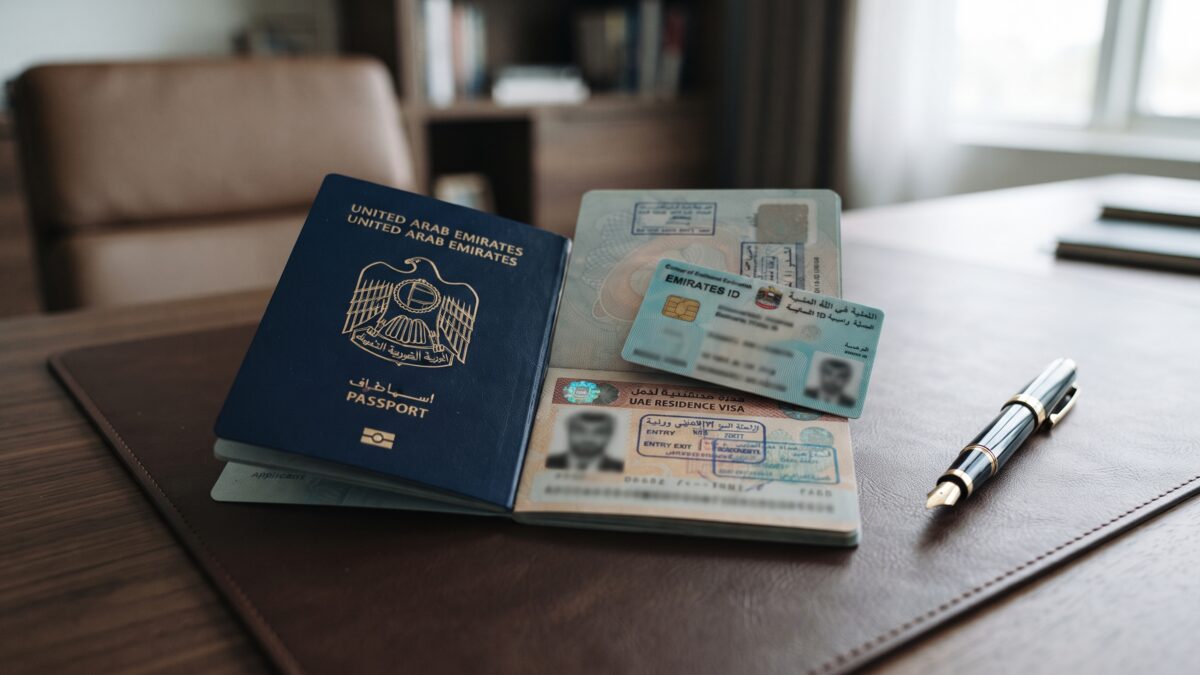


The UAE visa system is no longer a simple "tourist visa versus work visa" model. It has evolved into a layered mobility framework built for tourists, employees, investors, founders, remote workers, students, retirees, and families. That matters because demand is large and still growing. Dubai alone welcomed 19.59 million international overnight visitors in 2025, up 5% year over year, while GDRFA Dubai's 2025 open-data metrics show 12,116,843 entry permits, 6,998,414 residence transactions, and 61,530,701 passengers processed across its systems. In other words, visa services in the UAE sit at the center of tourism, hiring, relocation, and business expansion.
For applicants, that scale creates both opportunity and complexity. The UAE offers more visa pathways than many first-time applicants realize, including jobseeker visas, virtual work visas, long-term tourist visas, Green visas, Golden visas, Blue visas, family sponsorship, and business-entry routes. But the route you choose affects your documents, your sponsor structure, your medical and Emirates ID steps, your approval timeline, and even which authority handles your file. Getting that sequence right is the difference between a smooth approval and a frustrating cycle of amendments, resubmissions, and fines.

Who actually handles UAE visa applications?
One reason applicants get confused is that "UAE visa services" is not one single counter. In practice, the system is split between the Federal Authority for Identity, Citizenship, Customs and Port Security (ICP) and GDRFA Dubai. Official UAE guidance says entry permits can be applied for through the ICP website, the UAEICP app, the GDRFA Dubai website, Dubai Now, and typing centres. For Dubai-issued visas, GDRFA Dubai is the key operational authority; for many federal services across the other emirates, ICP is the main channel.
That split is more than administrative. It changes how applicants submit, track, amend, extend, or cancel applications. ICP's official portal allows users to check application status using a PRAN, IDN, or request number, while UAE government guidance also directs Dubai visa holders to GDRFA for Dubai-specific enquiries. This matters for employers, founders, and families because filing in the wrong ecosystem can delay the process before the real review even starts.

The UAE now offers far more visa routes than most applicants expect
The modern UAE framework is designed around purpose, not just nationality. Standard residence visas still exist for employees and dependents, but the system now includes short-term mobility, self-sponsored work, investor pathways, and long-term talent residency. Official UAE sources currently show transit visas for 48 hours or 96 hours, sponsored by UAE-based airlines; GCC resident eVisas valid for 30 days, extendable once for another 30 days; jobseeker visas with validity options of 60, 90, or 120 days; a one-year virtual work visa for people employed outside the UAE who want to live in the country legally while working remotely; a Golden Visa that is renewable and valid for 5 or 10 years, depending on category; and a Blue Visa that gives qualifying environmental and sustainability contributors a 10-year residence visa. Residence structures range from 1, 2, or 3 years for sponsored visas to 5 or 10 years for qualifying long-term categories.
This variety is one of the UAE's clearest strategic advantages. It allows the country to target tourism, skilled migration, entrepreneurship, remote work, and specialized talent in parallel rather than through a single immigration funnel. That is a major reason visa services now matter to employers, consultants, relocation teams, and founders just as much as they matter to travelers.
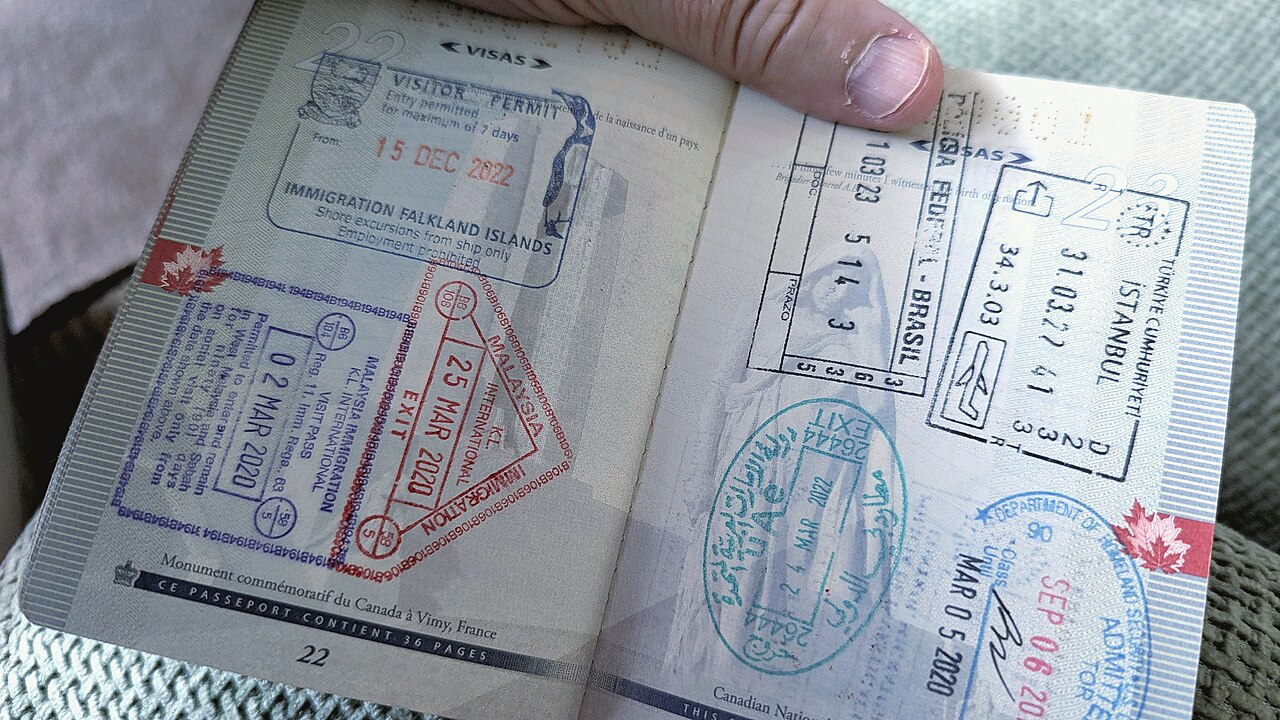
From application to approval: how the process really works
The application process is a sequence of deliberate steps, not a single form submission. Each step builds on the previous one, and skipping or misaligning any step can delay the entire file.
Step 1: Start with the right category, not the fastest-looking form
The application process begins with a basic but critical question: what are you actually coming to the UAE to do? Official UAE guidance distinguishes between those who need a visa in advance, those eligible for visa on arrival, GCC citizens who do not need a visa, and specialized categories such as tourist, transit, jobseeker, family, work, business, and long-term residency. A visitor applying under the wrong category may submit a technically complete file that is still wrong in substance. A useful example is the difference between a person entering to find work and one entering after already being hired. The first may fit a jobseeker visa. The second may need a work permit and then a residence process. A remote employee working for a non-UAE employer should not automatically assume a tourist route is acceptable when the UAE already has a dedicated virtual work framework.
Step 2: Build the document set around the category
Once the route is chosen, the document logic becomes much easier. ICP's visa-service cards repeatedly point to a core set of documents: a passport, personal photo, and category-specific supporting documents. For some files that means proof of kinship or sponsor documents; for others it means a work contract, a salary certificate, medical evidence, health insurance, an auditor's letter, or a recommendation from a competent authority. In practice, most applicants should expect some version of the following checklist: passport with at least 6 months' validity; personal photo and basic identity documents; sponsor or relationship evidence for family and dependent routes; employment or income proof for work, remote work, or investor-related categories (ICP's virtual work service, for example, requires proof of remote employment and a salary certificate of USD 3,500 or equivalent); health insurance or medical documents where the category requires them. This is where many files go off track. Applicants often think the UAE process is difficult because it is digital. In reality, it is difficult because it is category-sensitive. A missing supporting letter or a document prepared for the wrong visa type can be more damaging than a minor typo.
Step 3: For work cases, think in layers — permit first, residency second
Employment cases are where first-time applicants most often underestimate the process. Official UAE guidance separates work permits from residence visa issuance. MoHRE states it has 13 types of work permits, while UAE government employment guidance links expatriate hiring to getting a work permit and then a residence visa for working in the UAE. That means hiring is not just a visa event; it is a labor-and-immigration sequence. A candidate may have the right qualifications and even a signed offer, but the file still has to move through the correct permit path before the residence file is finalized.
Step 4: Medical fitness and Emirates ID are part of the approval journey
For residence categories, the process does not end when the initial application is submitted. ICP's residence-permit service explicitly says the new residence permit is linked to an Emirates ID card application. UAE government guidance also states that foreign nationals seeking a work or residence permit must be free of communicable diseases such as HIV and TB. In some cases, a prior appointment is required for center visits involving biometrics or fingerprint procedures. This is one of the most misunderstood parts of UAE visa services. Many applicants think the approval is a single yes-or-no moment. In reality, residence approval is a chain: application submission, review, fee payment, medical and identity processing where required, and then final residence issuance tied to the Emirates ID workflow.
Step 5: Pay, track, respond, and avoid silence
Official ICP service cards are clear about the digital sequence: submit, review, attach documents if needed, pay fees, and follow up on the request. UAE government guidance and ICP's own tools let applicants track status through online portals, smart services, and helplines. That tracking layer matters because many delays are not final refusals. They are pending-document, correction, or clarification situations that can often be fixed quickly if someone is actually watching the file. Interestingly, some current ICP service cards list very short internal timelines for specific categories. Both the virtual work visa service and the entrepreneur Golden Residency entry-visa service show a service completion duration of 2 days on their ICP pages. That does not mean every applicant will be approved in 48 hours, but it does show how digital the back end has become when documents and category selection are correct.
Step 6: Final issuance, delivery, and post-approval obligations
After approval, residence issuance is followed by the Emirates ID issuance and delivery through authorized courier companies, according to ICP's service card. From there, compliance still matters. Applicants need to monitor validity, renew on time, and understand category-specific grace periods and fines. ICP states that a fine of AED 50 per day applies for each day of overstay after the relevant grace period has ended. UAE guidance also notes that dependents get a 6-month grace period after visa expiry or cancellation to obtain a new residence permit.
Where applications usually slow down
Official service cards do not publish a neat list of "top rejection reasons," but the architecture of the process makes the biggest risk areas fairly clear. Based on the UAE's category-based document rules and approval sequence, delays tend to cluster around a few predictable problems: incomplete document sets, category mismatch, expired or near-expiry passports, medical-clearance issues, and files that require amendments after submission.
The practical takeaway is simple: UAE visa work is increasingly digital, but not forgiving. Digital systems speed up correct files; they do not rescue weak ones.

Why visa services still matter in a digital-first UAE
A common assumption is that professional visa support is becoming less important because everything is online. The opposite is often true. The UAE's digital infrastructure is improving fast, but the system itself is becoming more sophisticated, not simpler. MoHRE said in December 2025 that it completed 13 million transactions using automation and AI without human intervention, and that its smart work-permit quota system reduced processing time from 10 days to one second for that specific function. That is a major modernization story.
But faster processing raises the cost of preventable mistakes. When the system can move quickly, errors stand out faster too: wrong visa class, missing sponsor evidence, inconsistent work-permit sequencing, incomplete medical or insurance paperwork, or failure to use the right authority for the right emirate. That is where experienced visa services still add value. They do not replace the government platform; they reduce friction before the file hits the platform.

Practical tips before you submit any UAE visa file
Before filing, applicants and businesses should pressure-test the process with a few practical checks:
Confirm which authority will handle the file: ICP, GDRFA Dubai, or a sponsor channel such as an airline, hotel, or travel agent.
Match the file to the real purpose of travel: tourism, job search, remote work, employment, investment, study, or family sponsorship.
Check passport validity early. Six-month validity appears repeatedly across official service requirements.
For family sponsorship, confirm the sponsor meets the current salary benchmark of AED 4,000 or AED 3,000 plus accommodation.
Keep track of grace periods and overstay penalties, especially if a file is being converted, renewed, or cancelled and replaced.
For employment cases, remember that a UAE work move is often a permit-plus-residency process, not a single application.

Conclusion
UAE visa services are no longer a narrow back-office function. They are part of the country's economic operating system. The same framework that supports tourism at record levels also supports hiring, family relocation, entrepreneurship, remote work, and long-term residency for specialized talent. The government has clearly moved toward broader visa choice, stronger digital delivery, and faster processing, as shown by the expansion of long-term categories like the Golden and Blue visas, the availability of jobseeker and virtual work routes, and the automation gains reported by MoHRE.
The strategic lesson is straightforward: in the UAE, visa approval is rarely just about submitting a form. It is about choosing the right pathway, aligning labor and immigration steps where required, managing medical and identity milestones, and keeping the file accurate from day one. As the UAE continues to attract more visitors, businesses, and global talent, the winners will be the applicants and companies that treat visa services not as paperwork, but as a compliance and mobility strategy.

Frequently Asked Questions
UAE visa services help applicants manage entry permits, residence visas, renewals, cancellations, status tracking, and related compliance steps.
Visa applications are mainly handled by ICP across the UAE and GDRFA for Dubai-issued visas.
The first step is choosing the correct visa category based on your purpose of travel, work, study, business, or family sponsorship.
Yes, many UAE visa types can be applied for through official online portals, mobile apps, and approved typing centres.
Most applications need a valid passport, personal photo, and supporting documents based on the visa type.
Processing times vary by visa type, authority, and document accuracy, but complete applications are usually processed faster.
Yes, many residence visa applicants must complete a medical fitness test as part of the approval process.
Yes, Emirates ID application is usually connected to the residence visa process for eligible applicants.
Common delays happen because of missing documents, wrong visa category selection, passport validity issues, or incomplete sponsor details.
Professional visa services help reduce errors, improve document accuracy, and make the process smoother from application to approval.