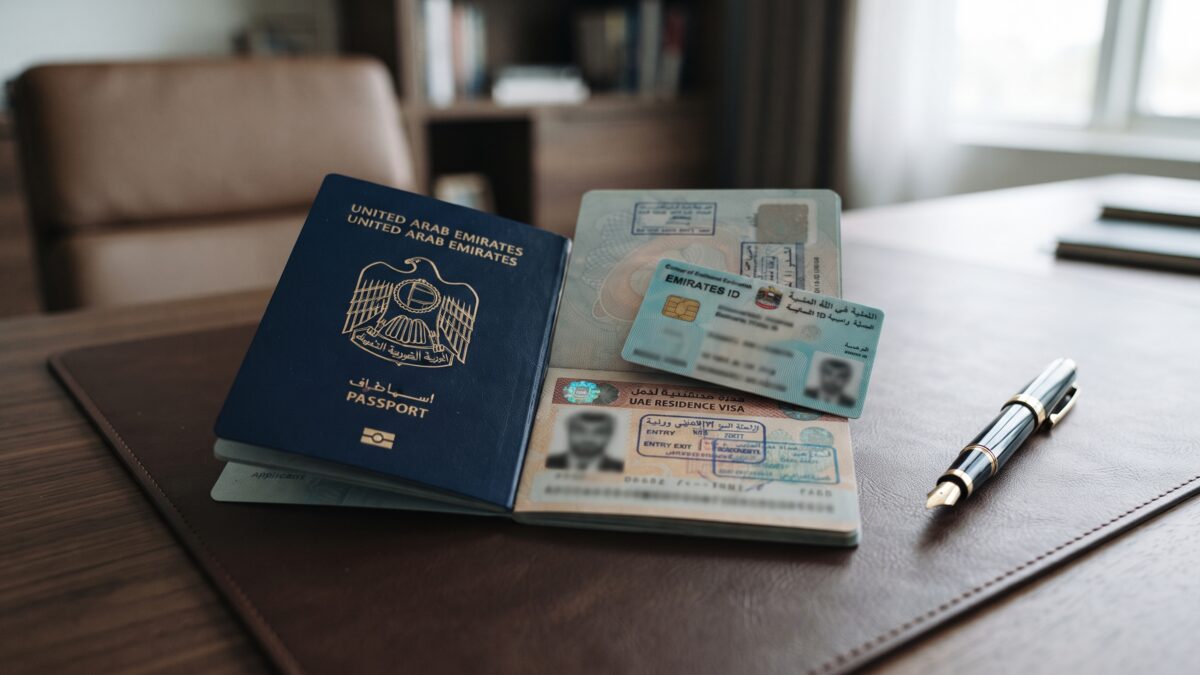


Starting a business in the UAE is not only about getting a trade licence. For most founders, the real operational journey begins when they need to secure their own residency, sponsor family members, hire employees, open bank accounts, renew permits or move staff across borders without delays.
This is why visa planning has become a serious business issue. The UAE continues to attract entrepreneurs, investors, and skilled workers at scale. In 2024, the country attracted AED 167.6 billion, or USD 45.6 billion, in FDI inflows, ranking 10th globally and recording around 48% growth compared with the previous year. It also ranked second globally for newly announced greenfield FDI projects, with 1,369 projects in 2024.
For business owners, this growth creates opportunity, but it also creates pressure. More companies mean more visa applications more hiring more compliance checks and more need for correct filing from day one.
Why Visa Planning Matters for UAE Business Owners
The UAE's business environment is expanding quickly. In Q1 2025, the UAE's real GDP grew by 3.9% to AED 455 billion, while non-oil GDP grew by 5.3% to AED 352 billion. Non-oil activities contributed a record 77.3% of real GDP, showing how strongly the economy is now driven by trade, finance, manufacturing, construction, real estate, services and entrepreneurship.
Dubai's company formation numbers tell the same story. Dubai Chamber of Commerce added 70,500 new companies in 2024, bringing active members to 258,318 an 18% annual increase. Member exports and re-exports also exceeded AED 300 billion for the first time, reaching AED 309.6 billion.
For a business owner, visas affect more than legal stay. They influence:
Whether the founder can reside in the UAE and manage the company locally. Whether employees can legally work under the correct permit. Whether family relocation is possible. Whether renewals, cancellations, and transfers happen without penalties. Whether the company appears properly structured during banking, leasing or authority-facing processes.
A visa mistake may look small at first, but it can delay hiring, block dependent sponsorship, interrupt banking onboarding, or expose the business to fines.

Understanding the Main UAE Visa Routes for Business Owners
There is no single business visa that fits every founder. The right route depends on ownership structure, employment status, family needs, investment profile, and long-term plans.

Investor or Partner Residence Visa
For many entrepreneurs, the investor or partner visa is the most practical route. It is typically linked to company ownership, shareholder status, or participation in a licensed UAE business.
This route matters because it gives the founder legal residence connected to the company. It is often the first step before opening certain accounts, leasing property, sponsoring dependents, or managing business operations from inside the UAE.
The practical issue is category fit. A mainland company, free zone company, shareholder structure, and business activity may each create different document and approval requirements. A founder should not assume that having a licence automatically means every visa step is complete.
Employment Visa for Staff
If the company is hiring employees, the employment visa process becomes part of workforce planning. The UAE Government's official portal explains that the standard work visa applies to employees in government and private sectors, while the Green Visa can apply to skilled employees on self-sponsorship.
MoHRE also lists 13 types of work permits, issued depending on the nature of the job and the establishment's status.
For business owners, this means job titles, contracts, quotas, qualifications, and company registration details must be aligned before hiring. A rushed employment visa can create avoidable rejections if the job role, documentation, or company file is not consistent.
Family Visa for Dependents
Once a founder or employee receives UAE residence, family sponsorship becomes a major concern. Family visa applications usually involve salary or financial solvency checks, relationship documents, housing proof, medical fitness for adults, and health insurance.
ICP guidance states that a foreign resident may sponsor a spouse, unmarried daughters, sons under 25, and children with special needs, subject to conditions. It also notes the common financial threshold of AED 3,000 plus employer-provided housing, or AED 4,000 without housing.
For business owners relocating with family, this should be planned before arrival. Marriage certificates, birth certificates, translations, and attestations often take longer than applicants expect.

Golden Visa and Green Visa Options
The Golden Visa is a long-term residence route for eligible investors, entrepreneurs, exceptional talents, professionals, students, and other qualifying categories. UAE Government guidance describes it as a long-term visa that allows foreign talents to live, work, or study in the UAE while enjoying exclusive benefits.
The Green Visa is also important for business owners and skilled professionals. The official UAE portal says the Green Visa is available to investors establishing or participating in commercial activities in the UAE.
The key point is that Golden and Green routes are not simply premium versions of a normal visa. They have separate eligibility logic. A business owner should assess evidence carefully before applying, especially where investment value, business records, professional classification, or approvals are required.
How the UAE Visa Process Works in Practice
A clean visa process is usually not about speed alone. It is about doing each step in the right order.
Step 1: Match the Visa Route to the Business Structure
Before filing, the applicant should confirm the correct category: investor, partner, employee, dependent, Green Visa, Golden Visa, or another route. This avoids one of the most common problems: starting under the wrong category and correcting the application later.
Step 2: Prepare the Company and Immigration File
For company-linked visas, the trade licence, establishment card, shareholder details, passport copies, photographs, and relevant approvals must be ready. If the company plans to sponsor employees, its labour and immigration records must also support that hiring plan.
Step 3: Complete Entry Permit or Status Change
If the applicant is outside the UAE, an entry permit may be required. If the applicant is already inside the UAE, status change rules may apply. ICP notes that residence issuance is linked to selected digital channels, document submission, fee payment, follow-up, and final Emirates ID issuance.
Step 4: Medical Fitness and Emirates ID
For adults, medical fitness is a core checkpoint. Emirates Health Services states that the medical fitness examination allows expatriates to obtain a certificate proving they are free from communicable and infectious diseases for residence issuance or renewal. The process includes UAE PASS login, appointment booking, radiology, evaluation, and results sent by email or SMS.
This is where poor sequencing creates delays. Medicals, Emirates ID, insurance, and final residence issuance must be coordinated within valid timelines.

Step 5: Insurance, Stamping, Renewals, and Compliance
From 1 January 2025, mandatory health insurance coverage was extended across the Emirates for private-sector employees and domestic workers. MoHRE states that employers must purchase the policy as a prerequisite for issuing or renewing residency permits, with the Basic Health Insurance package priced at AED 320 per year for targeted groups in Sharjah, Ajman, Fujairah, Ras Al Khaimah, and Umm Al Quwain.
This change matters for business owners because visa budgeting now needs to include insurance compliance, not just government filing fees.
2024–2026 Trends Changing UAE Visa Services
The biggest trend is digital consolidation. The UAE's Work Bundle was launched to simplify employee residency and work permit procedures for private-sector companies. MoHRE says the system reduced procedures from 15 steps requiring 16 documents to 5 steps and 5 documents, reduced visits from 7 to 2, and cut transaction time from 30 working days to 5 working days.
The Work Bundle focuses on three core services: new employee onboarding, work permit renewal, and employee permit/residence cancellation.
Dubai's immigration activity also shows the scale of digital demand. GDRFA Dubai's 2025 open data listed 12,116,843 entry permits, 6,998,414 residence transactions, 61,530,701 passengers, and 26,374,304 smart gate transactions.
For business owners, the lesson is clear: UAE visa services are becoming faster, but not necessarily simpler for unprepared applicants. Digital systems reward accurate information. Incorrect documents, inconsistent job titles, missing insurance, or unclear sponsorship logic can still delay an application.

Common Visa Mistakes Business Owners Should Avoid
Even experienced entrepreneurs make visa mistakes because they treat residency as an afterthought. The most common problems include:
Choosing a visa route before reviewing eligibility properly. Registering a company without checking future visa quota needs. Hiring employees before confirming work permit category and documents. Forgetting that family sponsorship depends on income, housing, relationship proof, and the sponsor's valid residence. Missing renewal or cancellation windows. Assuming Golden Visa eligibility without sufficient evidence. Ignoring health insurance requirements introduced or expanded from 2025. Using unofficial quick visa offers instead of verified channels.
Overstay and timing errors can become expensive. ICP states that an AED 50 fine applies for each day of overstay after an entry permit expires or is cancelled, starting after the applicable grace period.
Practical Takeaways Before Applying
A business owner should approach UAE visa services as part of company planning, not as a separate admin task. Before applying, review three things: the business structure, the applicant profile, and the future use case.
If the owner plans to hire, the company file and visa quota matter. If the owner plans to relocate family, dependent eligibility and document attestation matter. If the owner wants long-term stability, Green or Golden Visa eligibility may be worth assessing. If the owner expects rapid expansion, renewals and employee onboarding should be mapped in advance.
Emirates EBCS structures visa support around investor, employment, family, and Golden Visa guidance, including route matching, document handling, medical and Emirates ID sequencing, renewals, transfers, and cancellations.
Conclusion
The UAE is becoming more attractive for founders, investors, skilled professionals, and international companies. Strong FDI inflows, record non-oil GDP contribution, rising company registrations, and faster digital government services all point in the same direction: the country is building a more mobile, business-friendly economy.
But faster systems do not remove the need for careful preparation. For business owners, the best visa strategy is not simply the quickest application. It is the route that fits the company, protects compliance, supports hiring, enables family relocation and keeps renewals manageable.
In 2026 and beyond UAE visa services will continue moving toward digital processing, integrated government platforms and stricter data accuracy. Business owners who plan visas early will have a smoother path to growth. Those who treat visas as last-minute paperwork may face delays exactly when they need momentum most.
Frequently Asked Questions
Most founders start with an investor or partner residence visa linked to their company. Green Visa or Golden Visa options may be suitable if the applicant meets specific eligibility requirements.
Yes, if the business owner holds valid UAE residence and meets sponsorship conditions such as income, housing, relationship proof, medical fitness and insurance requirements.
Yes. Adult residence visa applicants generally need a medical fitness test before residence issuance or renewal.
Timelines vary by emirate, visa type, documents, medicals, Emirates ID and authority workload. Digital platforms such as Work Bundle have reduced processing steps for many employment-related services.
Professional visa support helps match the right route, prepare documents correctly, manage medical and Emirates ID steps, avoid renewal delays and reduce compliance risks.