
Someone signs a contract on the 1st, expects to start work on the 15th, and lands on the 30th with a fine to pay. This happens constantly, and almost never because the immigration department was slow.
The UAE employment visa process is not one application. It is a sequence of approvals issued by different authorities in a fixed order, and each one depends on something the company did months earlier. Business owners usually discover this at the worst possible moment: they've won a project, they need six people, and they find out their licence allows two.
Employees discover it differently. They're told "your visa is being processed" for three weeks with no explanation, then suddenly asked for an attested degree certificate that their university takes a month to release.
Both problems come from the same gap. Nobody explained what the process is actually made of.
The word "visa" is doing too much work
For a foreign national to work legally in the UAE, four separate things have to happen, and only one of them is what people mean when they say visa.
The employer first needs permission to hire that specific person. On the mainland, that permission comes from the Ministry of Human Resources and Emiratisation (MOHRE) and is called a work permit. Inside a free zone, the free zone authority does the same job under its own rules.
The person then needs permission to enter the country for that purpose. That's the entry permit, issued by immigration (GDRFA in Dubai, ICP in most other emirates). It has a limited life and a hard deadline attached to it.
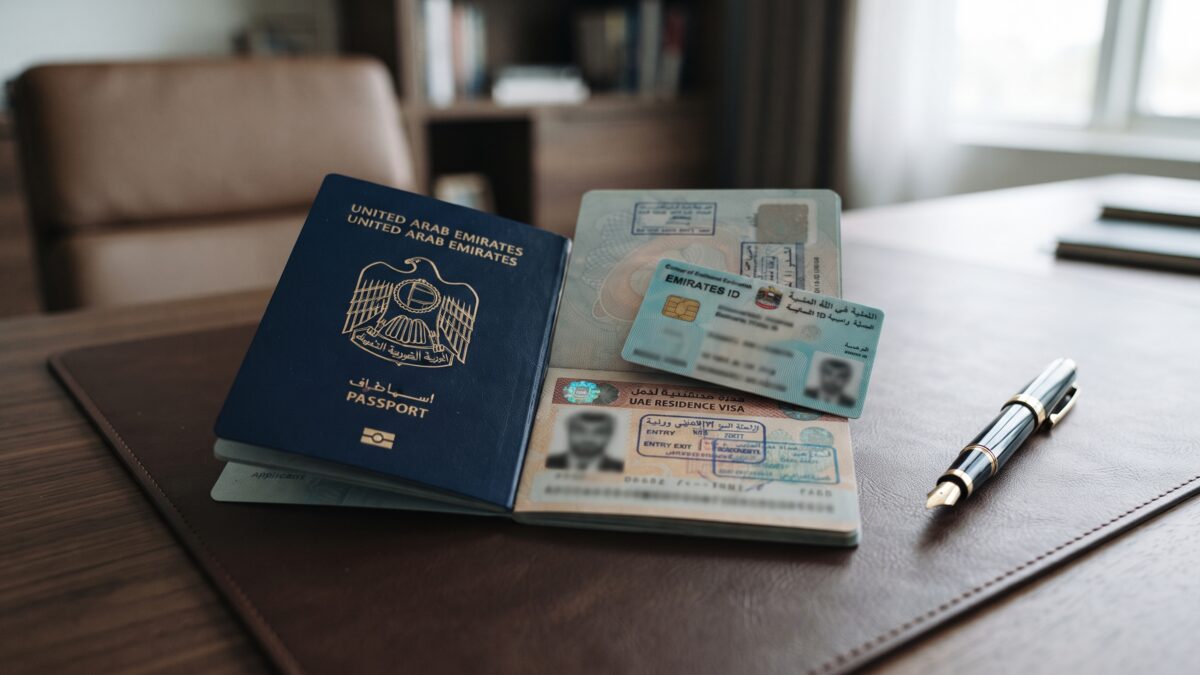
Before residence can be granted, the person has to be medically screened and biometrically registered. Blood test, chest X-ray, fingerprints, Emirates ID file.
Only then is the residence permit issued and linked to the Emirates ID. Most of it now lives digitally rather than as a sticker in the passport.
Skip one of those and the next will not process. That is the entire logic of the system, and it's why "we'll sort the paperwork later" is such an expensive sentence in this country.
What a company needs in place before it can sponsor anyone
The establishment card holds up everything else
Before a single employee exists on paper, the company needs an immigration file, usually called the establishment card. It is the company's identity inside the immigration system, and every visa the company ever applies for is filed against it.
It also expires. A lapsed establishment card freezes every transaction attached to it: new hires, renewals, cancellations, even visas for the owner's own family. The common version of this story is a new hire sitting outside the country, unable to travel, because a renewal payment is sitting unpaid in someone's inbox. The employee did nothing wrong and can do nothing about it.
Your office decides your headcount, not your business plan
Visa quota in the UAE is tied to physical space and licence type. Free zones package it: a flexi desk gives you a small allocation, a private office gives you more, and the count scales roughly with square metres. On the mainland, MOHRE assesses quota against your tenancy contract (Ejari), your licensed activity, and your company's classification.
Here is the version that plays out every year. A founder takes the cheapest free zone package with two visas because they only need two people. Eight months later they sign a client and need six. Now they are upgrading an office mid term, paying for space they didn't budget for, and waiting on a fresh quota approval while the client waits on them. The saving at setup was a few thousand dirhams. The cost of fixing it is usually several times that, and it arrives exactly when cash is tightest.
If you expect to be at ten people within a year, buy the quota for ten people now.

Mainland or free zone changes who you answer to
This is not a paperwork preference. It sets your obligations for as long as the company exists.
Mainland companies sit under MOHRE, which means labour contracts registered with the ministry, salaries paid through the Wage Protection System, and Emiratisation targets that grow with your headcount. Free zone companies deal with their own authority instead, with different contract templates, different fees, and different rules around termination. DIFC and ADGM go further and run their own employment law, closer in feel to a common law system.
One consequence catches people out constantly. A free zone employee is licensed to work for a free zone company. Placing that person full time in a client's mainland office, or sending them around Dubai on sales calls all week, sits outside what their permit was issued for. Legitimate structures exist to cover it, including dual licences and mainland branches, and they are much cheaper to set up before an inspector asks than after.
From signed offer to Emirates ID: the employee's side of the process
Assume the company has its file, its quota, and a candidate who has said yes.
The offer letter goes first. On the mainland this is a MOHRE offer letter, signed by the employee before anything else moves, and the final labour contract has to match it. Not broadly reflect it. Match it. Salary, job title, benefits, notice period. When a contract appears at signing with a lower salary or a different title than the offer, the employee can refuse it, and if they have already resigned elsewhere and relocated, they will refuse it loudly. A surprising share of early stage employment disputes trace back to someone treating that offer letter as a formality.
The company then applies for the work permit and the entry permit. The entry permit gives the employee a window to enter the country and finish the rest of the process. It is not permission to start working yet, whatever the manager who needs the project delivered has to say about it.
Enter on the permit, or change status without leaving?
If the candidate is abroad, they enter on the employment entry permit and the clock starts.
If they are already in the UAE on a visit or tourist visa, there is a choice to make. In many cases the status can be changed in-country, which means no flight, no exit, no gap in their stay. It costs more per person. The alternative is a border run or a trip home, cheaper on paper and considerably less pleasant in practice, and occasionally it goes wrong in ways that cost you the whole timeline.
Two things decide it: whether the candidate's nationality and current visa type allow an in-country change at all, and how close their existing visa is to expiry. Overstaying by a few days while the file is "almost ready" produces daily fines and a sour start to the employment relationship.
Medical screening, biometrics, and closing the file
The medical is a blood test and a chest X-ray at an approved centre, with results usually back within a couple of days, faster if you pay for express service. Biometrics for the Emirates ID follow.
This is where honest timelines matter. A straightforward case runs a couple of weeks from entry to residence. Add a public holiday, a busy season, an additional security check triggered by nationality, or an X-ray flagged for review, and it stretches. Anyone promising you a guaranteed date is guessing.
The owner's own visa: investor, green, or golden
Owning a company does not hand you long term residence
Business owners routinely assume the trade licence comes with a decade of security. It does not. A standard investor or partner residence is granted on the strength of the licence and share ownership, and it lives and dies with them. Let the licence lapse, sell the shares, or restructure carelessly, and the residence goes, taking the family's visas with it, because their sponsor is you.
The green visa and getting off your own company's file
The green visa allows skilled employees, freelancers, and qualifying investors to sponsor themselves for five years without an employer holding their file. For a founder, the appeal is independence from the company's own status, plus the ability to sponsor family more freely. Eligibility turns on qualifications, occupation classification, and income or investment thresholds, and the criteria are revised often enough that you should check the current rules rather than a blog post from two years ago, including this one, eventually.
What the golden visa changes and what it doesn't
A golden visa gives ten years, self sponsorship, family sponsorship without the usual salary condition and a far longer grace period if things go wrong. What it does not do is exempt anyone from labour law. A golden visa holder working as an employee still needs a work permit issued by their employer. Founders hire golden visa holders all the time and assume there is nothing to file. There is.

The documents that quietly destroy timelines
Almost every stalled file traces back to one of the following, and every one of them can be fixed weeks in advance:
- Names that do not match. Passport, degree certificate, marriage certificate, and bank records all have to agree. Single name passports, common for several nationalities, need special handling early, because UAE systems expect a first name and a surname.
- Degree attestation. Skilled roles need an attested qualification, and attestation means the issuing country's authorities, then the UAE embassy there, then the UAE Ministry of Foreign Affairs. If the university is slow or the country is far away, this step alone can eat a month. Start it the week the candidate accepts, not the week you submit the file.
- The wrong job title. The title on the permit determines which skill category the employee falls into, which affects whether a degree is required and whether they can sponsor a spouse later. Manager and Coordinator are not interchangeable choices made for the sake of the org chart.
- An expired establishment card, quota, or trade licence. Any of these will block everything downstream, silently.
- Passport validity and blank pages. Six months is the practical minimum. It is a boring reason to lose two weeks.
- A flagged medical result. Further review takes as long as it takes, and the employee has no influence over it. Build the possibility into your planning quietly, and avoid promising a start date that depends on it.
The obligations that begin the day the visa is issued
Getting the residence is the start of the employer's exposure, not the end of it.
Mainland salaries have to run through the Wage Protection System, and late or short payments carry consequences that reach as far as your ability to issue new permits at all. Health insurance for employees is now a legal requirement across the country rather than only in Dubai and Abu Dhabi, as was the case for years. Employees are separately required to hold unemployment insurance under the ILOE scheme. That one is technically the employee's obligation rather than yours, although in practice you will be the person reminding them, because a lapse produces a fine that surfaces at renewal.
Mainland employers also carry Emiratisation targets that rise with headcount, with penalties calculated per unfilled position. If your hiring plan crosses the threshold, the cost of an Emirati hire belongs in that plan.
Then there is the exit. When an employee leaves, the employer cancels the work permit and the residence, and the employee receives a grace period to transfer to a new sponsor or leave the country. It is shorter than most people assume. Failing to cancel properly is worse than an inconvenience: unresolved files, absence reports filed in anger, and expired visas still attached to your establishment card will follow the company around for years.
Planning your hiring so immigration is not the bottleneck
Companies that never seem to have visa trouble tend to do a handful of unglamorous things.
They buy quota for the headcount they expect in a year rather than the one they have today. They start attestation the week a candidate accepts. They batch onboarding, because pushing four people through together is far less painful than four separate scrambles a month apart. They budget the real cost of a hire, which includes the permit, the medical, the Emirates ID, the insurance, and often a status change fee, instead of the headline "visa cost" quoted by a setup agent.
They also think about candidates in visa terms. Someone already sponsored by a spouse can often be employed on a permit that consumes no company quota at all, which is genuinely useful arbitrage when quota is tight. A short project may not need an employment visa at all if the person holds a freelance permit or works remotely from abroad.
What all of this adds up to
The UAE employment visa process is not difficult. It is unforgiving of sequence. The document you need at step four has to be requested at step one, and the office you leased in year one decides whether you can hire in year two.
The direction of travel is reasonably clear. Residence files have gone digital, self sponsorship keeps expanding for skilled people and founders, and the things employers used to treat casually (wage protection, insurance, Emiratisation, clean cancellations) are being enforced more seriously each year. Applying is getting easier. Complying is getting stricter. Plan around both and immigration stops being the thing that delays your business.
One caveat worth taking seriously: fees, thresholds, and timelines in the UAE change more often than in most countries, and sometimes with little notice. Treat anything you read, including this article, as a map rather than a timetable, and confirm the current rules with the relevant authority or a licensed PRO before you commit to a start date.
Frequently Asked Questions
A clean case usually runs two to four weeks from signed offer to Emirates ID, assuming the company already has an active establishment card and free quota. Missing attestations, a nationality that triggers extra security clearance, or a medical result sent for review will extend it, and no agent can guarantee a date around those.
The work permit is your permission to employ that person, issued by MOHRE or the free zone authority. The residence visa is the person's permission to live in the UAE, issued by immigration. Two approvals, two bodies. That is why cancelling one does not automatically cancel the other, and why someone can hold valid residence and still be working illegally without a permit.
Yes. An investor or partner residence is issued on the basis of the trade licence and share ownership, and it depends on the company staying active and compliant. Owners who want residence that is not tied to the licence look at the green visa, or the golden visa if they qualify.
Usually. Under the current labour law the old system of automatic ban is largely gone, and a transfer can be completed in-country once the previous employer cancels the permit and the notice period has been served properly. Walking out without notice, or letting an employer file an absence report, is what still causes real damage.
The employer cancels the work permit and the residence, and the employee gets a grace period to move to a new sponsor or leave the country. Family members sponsored by that employee are on the same clock, and their health insurance ends with the visa. Handling the cancellation properly on the way out is the cheapest thing either side can do to avoid an expensive argument later.