
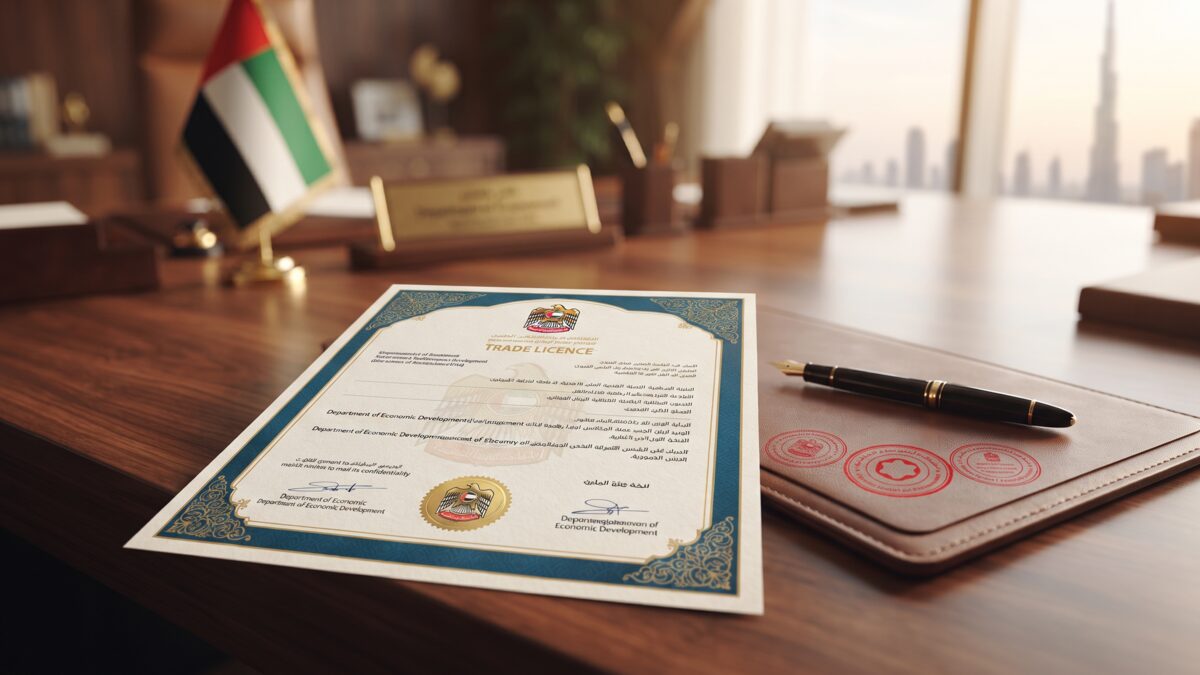
Starting a business in the UAE can appear straightforward: choose an activity, reserve a company name and obtain a trade licence. In practice, however a trade licence may be only one part of the approval process.
The approvals required depend on what the company does, where it is registered, whether it needs physical premises, whether it will hire employees and whether its activities fall within a regulated industry. A consulting firm working from a free-zone business centre will usually have a different approval path from a restaurant, medical clinic, transport company or financial services provider.
Problems often arise when founders discover an additional approval after signing a lease, paying setup fees or committing to a launch date. Understanding the approval sequence before making those commitments can prevent expensive changes, rejected applications and unnecessary delays.
How the UAE Business Approval System Works
The UAE does not use a single approval process for every business. Company formation is divided between economic licensing authorities, free-zone authorities, federal regulators and local government departments.
The official mainland setup process includes selecting the business activity and legal form, registering the trade name, obtaining initial approval, preparing the relevant incorporation documents, choosing a business location and securing any additional government approvals connected to the activity.
Mainland and Free-Zone Approvals Are Different
A mainland company normally receives its commercial licence from the economic development authority in the emirate where it is established. Depending on the activity, it may also need approval from a federal ministry, municipality or specialist local regulator.
A free-zone company applies through its chosen free-zone authority. Each free zone has its own list of permitted activities, legal structures office requirements and internal procedures. Some regulated activities may still require approval from an authority outside the free zone.
The cheapest or fastest jurisdiction is therefore not always the most suitable one. The chosen authority must be able to license the company's real commercial activity and support its intended operations.
An Initial Approval Is Not Permission to Start Trading
Initial approval generally confirms that the licensing authority has no objection to the proposed company being established. It allows the founders to continue with the remaining formation steps.
It does not by itself, authorise the company to begin providing services, signing regulated contracts or operating commercially. The final licence and any required external approvals must still be issued. The UAE Government also notes that certain activities require approval from the relevant authority before the normal initial-approval stage can be completed.
For example, receiving initial approval for a healthcare company does not mean the company may immediately open a clinic. The facility, professionals, premises and healthcare activities may each need separate clearance.
Core Approvals Required During UAE Company Formation
Although requirements vary, several approval stages appear across many mainland and free-zone formations.
Business Activity Approval
Every UAE licence is built around one or more approved business activities. These activities determine what the company is legally permitted to do.
The wording matters. "Management consultancy," "marketing management," "technical services" and "commercial brokerage," for example, may sound related but can have different regulatory conditions and operating limits.
A founder should therefore describe the actual business model before choosing the activity. This includes how the company will earn revenue, who its customers will be, whether it will sell physical products and whether it will handle client money or regulated information.
Choosing a convenient but inaccurate activity can cause problems when opening a bank account, applying for employee visas, signing major contracts or adding services later.
Trade Name Reservation
The proposed company name must be reserved with the relevant economic or free-zone authority. It must follow local naming standards and should not duplicate or closely imitate an existing registered name.
Additional consent may be needed when a proposed name includes a protected term, regulated profession, government reference or existing trademark.
Founders should also check whether the matching domain name and social media handles are available. Government approval of a trade name does not automatically provide trademark protection.
Initial Government Approval
Once the activity, ownership and legal structure have been identified, the relevant authority reviews the proposed formation.
At this stage, the authority may check the shareholders' identities, nationalities, legal form and selected activities. Depending on the case, additional documents such as a current company licence, certificate of incorporation or board resolution may be required when a corporate shareholder is involved.
Foreign-issued corporate documents may also need notarisation, legalisation, attestation and Arabic translation before they are accepted.
Approval of Incorporation Documents
The company may need a Memorandum of Association, Articles of Association, local service agent agreement, board resolution or other constitutional documents, depending on its legal form and jurisdiction.
These documents establish important matters such as:
- Ownership percentages and share capital
- Management and signing authority
- Profit distribution
- Partner responsibilities
- Procedures for transferring ownership or closing the company
These documents should reflect the real commercial arrangement between the partners rather than being treated as a formality. Poorly defined signing powers or management rights can create serious problems when the company begins dealing with banks, regulators or investors.
Premises, Tenancy and Municipality Approval
A business that requires physical premises may need to provide a registered tenancy contract or another approved occupancy document before its licence is issued.
The premises must also be suitable for the licensed activity. An office approved for administrative consultancy may not be acceptable for food production, medical treatment, warehousing or industrial work.
Depending on the activity and emirate, the company may need planning approval, fit-out approval, signage permission, environmental clearance or a municipality inspection. Free-zone companies using flexi-desks or shared facilities usually follow the workspace rules of their respective authority.
Signing a long-term lease before confirming that the location supports the selected activity is one of the most expensive setup mistakes a founder can make.
Civil Defence and Fire-Safety Approval
Premises that receive customers, store goods, use specialised machinery or undergo a commercial fit-out may require approval from the relevant Civil Defence authority.
The review may cover emergency exits, fire alarms, extinguishing systems, evacuation arrangements and other fire-and-life-safety requirements. Dubai Civil Defence, for example, provides approval services and applies the UAE Fire and Life Safety Code to buildings and establishments.
The exact requirement depends on the property, its intended use and the nature of the business. A standard office and a commercial kitchen will not be assessed in the same way.
Final Trade Licence Issuance
Once the required documents and external approvals have been accepted, the licensing authority can issue the final trade licence.
The licence should be checked carefully. The company name, activity, legal form, owners, manager and address must match the approved company documents. Even a small inconsistency can create difficulties during immigration, labour, banking or regulatory applications.
The company should not assume that receiving the licence completes every operational requirement. Hiring, tax, customs and industry-specific registrations may still be outstanding.

External Approvals for Regulated Business Activities
Some activities affect public health, safety, education, finance, transport, communications or consumer protection. These businesses usually require approval from a specialist authority in addition to their standard commercial licence.
Common examples include:
- Healthcare and pharmaceuticals: Clinics, medical centres, pharmacies and other healthcare facilities require licensing through the competent health authority. Depending on the emirate, this may involve the Ministry of Health and Prevention or the relevant local healthcare regulator. Facilities and healthcare professionals can have separate licensing requirements.
- Education and training: Private educational institutions may require approval from the Ministry of Education or the competent emirate-level authority. Dubai, Abu Dhabi and Sharjah have their own education regulators for relevant institutions.
- Food and hospitality: Restaurants, catering companies, food traders and food-production facilities may need municipality, food-safety, layout, inspection and product-related approvals. UAE food businesses must operate within the country's public-health and food-safety framework.
- Banking, insurance and payment services: Businesses conducting activities regulated by the Central Bank of the UAE must obtain the appropriate authorisation. The Central Bank licenses categories including banks, finance companies, insurance businesses, exchange businesses, payment services and stored-value facilities.
- Securities and investment activities: Companies offering regulated securities or capital-market services may require licensing from the UAE Capital Market Authority, depending on the specific activity and jurisdiction.
- Media and publishing: Commercial media, broadcasting, digital-media platforms and certain advertising activities may require licences or permits from the competent media authority.
- Telecommunications: Providing regulated telecommunications services requires authorisation from the Telecommunications and Digital Government Regulatory Authority. Telecom equipment and related imports may also require separate registrations or release permits.
- Construction, engineering and property services: Contractors, engineering consultancies and property professionals may require municipality classification, professional qualification approval, Civil Defence clearance or registration with the relevant land and property authority.
- Transport and vehicle-related activities: Passenger transport, vehicle rental, delivery fleets and logistics activities may require additional approval from the relevant transport authority.
- Security services: Security guarding, surveillance-system installation and related activities may require police, security regulator or Ministry of Interior approvals, depending on the service and emirate.
The commercial activity should be reviewed at the beginning of the setup—not after the standard licence application has already been submitted.
Post-Licensing Approvals and Registrations
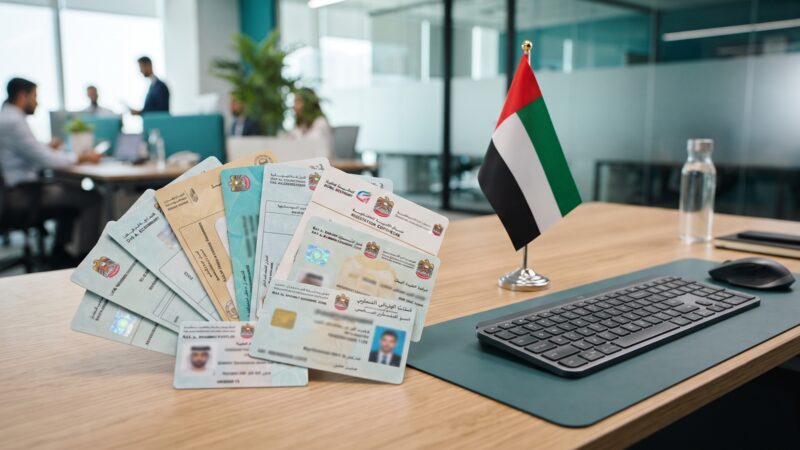
A company can hold a valid trade licence and still be unable to hire staff, sponsor visas, import goods or complete certain transactions. Several operational registrations may be required after incorporation.
Immigration Establishment Registration
Businesses that intend to sponsor owners or employees generally need an immigration establishment file or card with the competent immigration authority.
The responsible channel depends on the emirate and jurisdiction. Dubai-based cases may involve the General Directorate of Residency and Foreigners Affairs, while other cases may be processed through the Federal Authority for Identity, Citizenship, Customs and Port Security or the relevant free-zone channel.
Company details must remain consistent across the trade licence, establishment record and immigration applications.
Labour Establishment Registration
Mainland employers generally need to register their establishment with the Ministry of Human Resources and Emiratisation before applying for work permits.
The official process requires an employer to establish the company's labour record before recruiting employees. Work permits must then be obtained according to the job, employee category and applicable employment conditions.
Free-zone employers usually follow the labour and employment process administered by their free-zone authority, together with the applicable immigration procedures.
Corporate Tax Registration
Obtaining a trade licence does not automatically complete the company's tax obligations.
Persons subject to UAE Corporate Tax must register with the Federal Tax Authority and obtain a Corporate Tax Registration Number. The registration is completed through the FTA's EmaraTax platform.
The company should assess its tax position early, particularly if it operates across multiple jurisdictions, has related parties or expects to claim free-zone tax treatment.
VAT Registration
VAT registration depends on the value and nature of the company's taxable supplies and imports.
For UAE-resident businesses, VAT registration is generally mandatory when taxable supplies and imports exceed AED 375,000 over the previous 12 months or are expected to exceed that amount within the next 30 days.
A business should not wait until the threshold has already been exceeded before reviewing its records. Late registration can lead to administrative penalties and problems with customer invoicing.
Customs Registration
Businesses importing or exporting physical products may need to register with the relevant customs authority and obtain a customs business code.
In Dubai, for example, a licence holder must register with Dubai Customs before using import, export and customs-clearance services. Certain controlled goods may also require permits from the authority responsible for that product category.
A general trading licence therefore does not mean every product can be imported without restriction. Food products, medical devices, cosmetics, telecom equipment and other controlled goods can carry additional registration requirements.
Beneficial Ownership Records
UAE legal entities are generally required to identify and maintain accurate information about their ultimate beneficial owners, subject to the applicable rules and exemptions.
The beneficial-owner framework applies to legal persons registered in the UAE, including relevant free-zone entities, and requires companies to maintain ownership and shareholder information with the appropriate registrar.
These records should be updated when ownership or control changes. They should also remain consistent with the company's licence, constitutional documents and corporate records.
Approvals May Be Required Again When the Business Changes
Government approvals are not limited to the company's first licence application. Changes to the business may trigger fresh approvals or amendments.
Adding a new activity, moving to a different office, opening a branch, appointing a new manager or changing ownership can affect several government records at the same time.
For example, a company moving a licensed clinic cannot simply update the address on its commercial licence. The new facility may need to be assessed by the healthcare authority, municipality and Civil Defence before the relocation is fully approved.
The same principle applies when a standard consultancy adds a regulated financial, educational or technical activity. The new activity should not be marketed or provided until it appears on the licence and all associated approvals have been secured.
Common Approval Mistakes That Delay UAE Businesses
Many delays result from the sequence of the application rather than the complexity of the business itself.
- Selecting an activity based only on its name: The activity description may not cover the company's real services or revenue model.
- Signing a lease too early: The premises may not support the proposed activity or pass the required inspections.
- Treating initial approval as a final licence: Initial approval normally allows the formation process to continue; it does not authorise commercial operations.
- Discovering the external regulator too late: Regulated activities should be checked before incorporation costs are committed.
- Submitting inconsistent documents: Different spellings, addresses, ownership percentages or manager details can stop connected applications.
- Ignoring foreign-document attestation: Corporate documents and professional certificates issued abroad may need legalisation, attestation and translation.
- Starting work before employee permits are issued: A valid company licence does not replace immigration and work-permit requirements.
- Failing to update government records: Ownership, address, manager and activity changes must be reflected across all relevant authorities.
A well-managed approval file should use one verified set of company information across every submission.
A Practical Approval Roadmap for UAE Businesses
Before applying for a licence, the founders should map the business model in practical terms. This includes the services or products being sold, the intended customers, the location of operations, staffing requirements and whether physical goods will be imported.
The selected jurisdiction should then be checked against that operating model. The founders should confirm that the proposed activity is available, that the legal form is suitable and that the business can operate from the intended type of premises.
External regulators should be identified before the lease and final licence application. Where professional qualifications, security clearances, technical drawings or facility inspections are required, these should be included in the project timeline from the beginning.
After incorporation, the company should complete its immigration, labour, tax, customs and beneficial-ownership obligations before assuming it is fully operational.
This sequence is more reliable than applying for the fastest available licence and trying to correct the structure later.
How PRO Services Support the Approval Process
Government applications often involve several authorities whose requirements are connected. A change accepted by one authority may need to be reflected in multiple other records.
Professional PRO services can help a company determine the correct approval sequence, prepare authority-specific documents, coordinate attestations, follow up on applications and maintain consistency across licensing, immigration and labour systems.
Emirates EBCS supports UAE businesses with government liaison, document clearing, licence amendments, attestations, employee-related processes, renewals and regulatory follow-up. The objective is not simply to submit forms, but to make sure each step is completed in the correct order and brought to a proper conclusion.
This support can be particularly valuable for overseas founders, regulated businesses and companies managing several employee or licence applications at the same time.
Conclusion
Government approval in the UAE is not a single event. It is a chain that begins with selecting the correct activity and jurisdiction and may continue through premises clearance, external regulator approval, final licensing, immigration, labour, tax and customs registration.
The most important step is to identify the complete approval path before signing leases, hiring employees or announcing a launch date. A business that secures a quick licence but overlooks its operational approvals may still be unable to trade as intended.
As UAE government services become more digital and interconnected, accurate records and proper sequencing will become even more important. Businesses that treat approvals as part of their operating system not as one-time paperwork will be better positioned to expand, add activities and remain compliant without unnecessary disruption.
Frequently Asked Questions
No. Many standard commercial and consultancy activities only require approval from the licensing authority. Regulated activities may require additional approval from a ministry, municipality or specialist regulator.
No. Initial approval normally allows the setup process to continue. The company must obtain its final trade licence and any required external approvals before starting business operations.
Mainland licences are generally issued by the economic licensing authority in the relevant emirate. Free-zone licences are issued by the selected free-zone authority.
No. The company normally needs separate immigration and labour registrations before it can sponsor visas and obtain employee work permits.
Yes. Adding activities, changing ownership, relocating, opening a branch or entering a regulated sector may require licence amendments and fresh external approvals.