

For foreign investors, the hardest part of entering the UAE is no longer deciding whether the market is attractive. The real challenge is choosing the right legal and operating structure on day one. That decision affects ownership, tax treatment, banking, visas, compliance, and even whether you can sell directly into the local market. The backdrop is compelling: the UAE attracted USD 45.6 billion in FDI inflows in 2024, launched 1,369 greenfield FDI projects, and ranked #2 globally by greenfield project count, while the World Bank shows the economy grew 4.0% in 2024 and estimated 5.6% growth in 2025, led by strong non-oil activity. In that environment, a free zone company remains one of the most efficient ways for a foreign investor to establish a controlled, scalable presence in the country.
Why free zones still matter in 2026
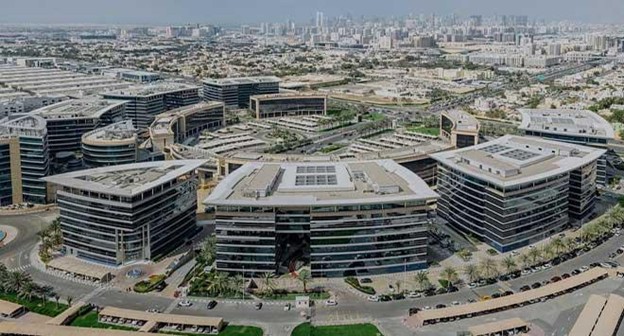
The UAE's free zone model is not a niche policy tool. It is a core part of the country's trade and investment architecture. Official UAE sources describe more than 40 free zones nationwide, while the UAE Embassy counts 46 free zones across the country, and Dubai alone says it has 20+ free zones serving specialized industries such as technology, trade, finance, media, agriculture, logistics, and more. The UAE Embassy also says free zones contribute about 40% of total exports, including re-exports, and Dubai's free zones account for 60% of the city's total goods exports.
What has changed is the reason investors choose them. Free zones used to be the obvious route because they offered foreign ownership while mainland structures did not. Today, mainland rules are more liberal: the UAE says foreign investors can fully own specific mainland businesses as well. That means free zones are no longer attractive only because of ownership. Their real advantage now is strategic fit: faster setup, sector-focused ecosystems, export orientation, and potentially favorable tax treatment when the business model qualifies.

What a free zone setup actually gives a foreign investor
Full ownership with a purpose-built business environment
A free zone company gives foreign founders control over the entity from the start, but the more valuable benefit is usually the ecosystem around that ownership. Dubai's investment platform highlights free zones as specialized clusters, and the UAE's official platform explains that setup begins by choosing the right legal entity, trade name, and business activity. In practice, that means a founder can select a zone based on what the business actually needs, whether that is fintech regulation, logistics access, light manufacturing capacity, media licensing, or a flexible startup package.
A structure designed for regional and cross-border business
Free zones are especially strong when the first phase of the business is cross-border rather than purely local. That is consistent with their role in the UAE's export engine and with the way Dubai positions free zones as a base for global trade, specialized industries, and international company formation. Dubai also notes that free zones allow repatriation of capital and profits, which remains an important consideration for international investors managing treasury and shareholder returns.
Access to a more modular market-entry strategy
A well-chosen free zone can work as a first landing platform rather than a final structure. Dubai explicitly notes that a free zone company cannot trade within the UAE without a specific mainland licence, while eligible companies holding a Dubai Unified Licence can apply digitally for that route. That creates a practical sequence for many foreign investors: start lean in a free zone, validate the region, and expand into mainland permissions only when local sales justify it.
The biggest misconception: free zone does not automatically mean tax-free
This is where many foreign founders make expensive mistakes. The UAE's Federal Tax Authority is clear: a Qualifying Free Zone Person can benefit from a 0% corporate tax rate on Qualifying Income, but other income is taxed at the standard 9% rate. The same bulletin also makes clear that a qualifying free zone entity is not using the standard small-income threshold the way an ordinary taxable person would; its non-qualifying taxable income is subject to 9% as prescribed under the free zone rules.
To preserve the 0% rate, the company must maintain adequate substance in the free zone, derive qualifying income, comply with arm's-length and transfer-pricing rules, maintain audited financial statements, and keep non-qualifying revenue within the lower of AED 5 million or 5% of total revenue. If the business fails the conditions or elects into the normal corporate tax regime, it loses Qualifying Free Zone Person status from that tax period and for the next four tax periods as well.
The FTA also draws an important line between activities that fit the regime and those that do not. Qualifying activities include areas such as manufacturing, processing, holding shares, headquarter services to related parties, treasury and financing services to related parties, distribution in or from a designated zone, and logistics services. Excluded activities include banking, most insurance other than reinsurance, much of finance and leasing, certain transactions with natural persons, and many forms of immovable property income outside narrow exceptions. That means a free zone structure is most efficient when the business model is matched to the federal tax rules, not when the founder simply assumes the zone name itself delivers the tax benefit.
VAT matters too. The UAE levies 5% VAT, mandatory registration generally applies once taxable supplies and imports exceed AED 375,000, voluntary registration becomes available above AED 187,500, and registered businesses must file VAT returns and make payments within 28 days from the end of the tax period. The UAE also does not levy personal income tax on individuals. For foreign investors, that combination can still be attractive, but it rewards compliance discipline rather than shortcuts.

When a free zone is usually the smarter first move
A free zone setup tends to make the most sense when the commercial model fits the structure rather than fights it.
You are serving customers outside the UAE or across multiple markets from one base. Free zones are deeply tied to export and re-export activity, which is where they are strongest.
Your business is sector-specific and benefits from a dedicated ecosystem. Dubai's free zones are organized around specialized industries rather than one generic licensing model.
You want full ownership now and local-market expansion later. That works particularly well when mainland sales are not the core revenue driver in year one.
Your revenue profile is compatible with Qualifying Income rules. This is where the 0% free zone corporate tax treatment can actually become meaningful.

When mainland may be the better choice
This is the part many setup guides gloss over. If your strategy depends on direct retail, broad domestic distribution, or routine onshore UAE trade from the outset, mainland may be the cleaner structure. Dubai says plainly that free zone companies cannot trade within the UAE without a specific mainland licence, and the UAE now permits full foreign ownership in specific mainland businesses. So the real question is not "Which option sounds cheaper?" but "Where will the revenue come from in the first 12 to 24 months?"
That distinction matters because the wrong structure can create friction in sales, contracts, customs flows, or tax treatment. A founder targeting GCC-wide B2B services may gain speed from a free zone. A founder planning a UAE-wide consumer rollout may save time by going mainland earlier. The smartest investors decide based on customer geography, not on marketing slogans.
How to choose the right free zone instead of the cheapest package
The best free zone is usually the one that aligns legal form, activity, tax profile, and business ecosystem.
Look at the operating environment, not just the licence fee
Official UAE and Dubai guidance points investors to legal entity type, trade name, activity selection, office arrangements, licensing, and follow-on registrations. Those are not admin details; they shape what the company can actually do. A low-cost licence in the wrong zone can become expensive if it complicates banking, expansion, tax treatment, or customer contracting later.
Use real zone examples to understand the differences
The gap between zones is not theoretical. DMCC says it now hosts 26,000+ registered companies and accounts for 15% of Dubai's annual FDI. Jafza says it supports 11,000+ businesses from 157 countries and facilitated AED 713 billion in non-oil trade in 2024, up 15% year on year. Those numbers show why free zone selection should follow business model. A commodities trader, logistics operator, manufacturer, and consultancy may all be "free zone companies," but they should not necessarily be in the same free zone.

Common mistakes foreign investors should avoid
Assuming "free zone" automatically means no corporate tax. The 0% rate depends on qualifying status, substance, income type, and compliance.
Choosing a zone before mapping revenue sources. If UAE mainland trade is central, licensing requirements can quickly change the equation.
Ignoring audit, transfer-pricing, and record-keeping obligations. The FTA requires audited financial statements for qualifying free zone persons and record retention for seven years.
Treating setup as a paperwork task rather than a market-entry design decision. The UAE's own setup guidance emphasizes legal form, activity, trade name, licensing, and office arrangements because those choices shape real operating rights.

Conclusion: why free zone setup is still a smart start
For foreign investors, a UAE free zone company is still a smart starting point, but the reason has become more sophisticated. It is not simply about chasing a low-tax jurisdiction. It is about entering one of the region's strongest investment environments with full ownership, specialized infrastructure, and a structure that can support regional trade, international services, or carefully planned expansion into the local market. That matters even more in a country that drew USD 45.6 billion in FDI in 2024 and continues to post strong non-oil growth.
The future outlook is clear: UAE free zones will remain important, but the winners will be investors who use them strategically. In 2026, the smartest setup is not the one with the flashiest brochure. It is the one that matches your sector, your revenue geography, and your tax reality from the very beginning.

Frequently Asked Questions
A free zone company is a business registered in a designated economic zone that allows foreign investors to own 100% of the company.
Many investors choose it for full ownership, simpler setup procedures, visa options, and strong access to regional and global markets.
Not usually. A free zone company normally needs additional approvals or a mainland licence to trade directly in the local UAE market.
Not always. Some qualifying free zone businesses may benefit from 0% corporate tax on qualifying income, while other income may be taxed at 9%.
The UAE has more than 40 free zones, with different zones serving industries such as technology, logistics, media, trade, and manufacturing.
No. Free zones are often better for international trade, exports, and regional operations, while mainland setup may suit businesses focused on direct UAE sales.
Common documents include passport copies, visa or entry records, business activity details, application forms, and sometimes a business plan.
Yes, but bank approval depends on the company's activity, ownership structure, compliance documents, and overall business profile.
Yes. Most free zones offer visa eligibility, but the number of visas usually depends on the licence package and office space selected.
They should compare business activity support, tax position, office needs, visa options, banking practicality, and whether the zone fits their growth plans.