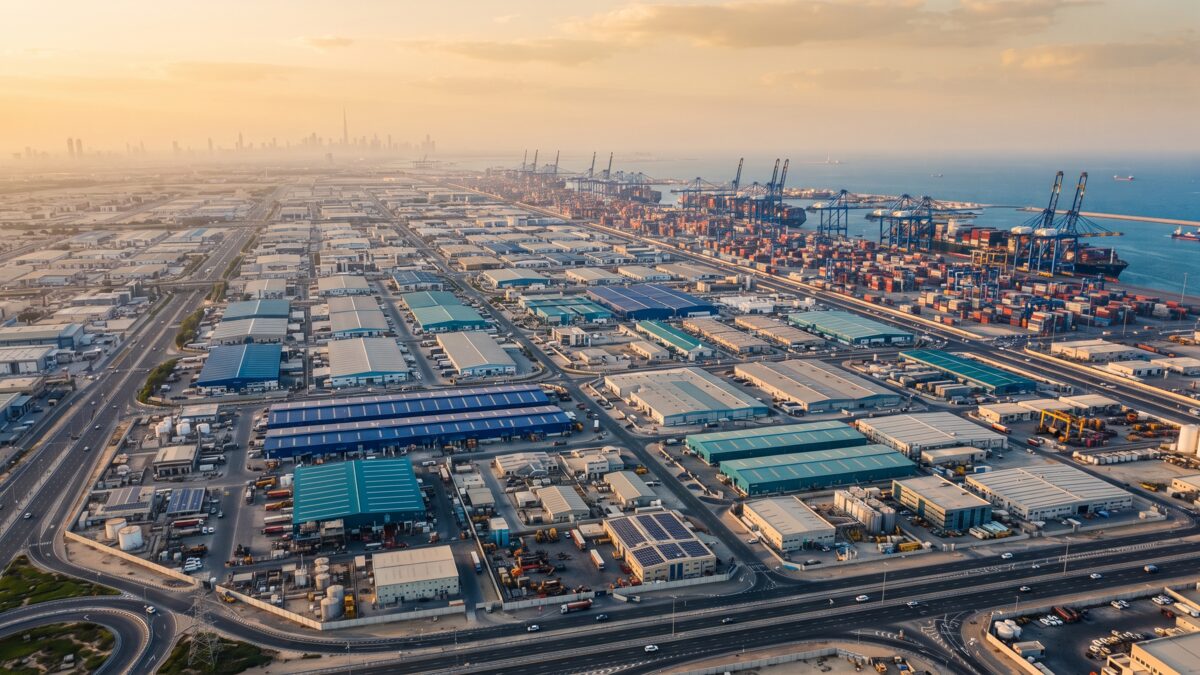
Most people choose a UAE free zone the way they choose a hotel. They compare the headline price and book. Then six or eight months in, they find out the licence fee was the smallest number in the entire project. The power connection was bigger. So was the product registration nobody mentioned. So was the customs duty that appeared the first time a container left the zone gate heading for a customer in Dubai.
Ras Al Khaimah Economic Zone (RAKEZ) sits in an interesting place in that calculation. It does undercut Dubai's marquee zones on almost every line item. But price is not really why serious manufacturers and stock heavy traders end up there. They end up there because of land, power, the port, and the fact that you can house several hundred workers ten minutes from the factory gate.
What follows is the version of the RAKEZ setup process that actually matters: the decisions that are hard to reverse and the ones that quietly decide whether your numbers work.
What Ras Al Khaimah is genuinely good at
RAK built its economy on things that are heavy and awkward to move. Limestone, aggregates, cement, ceramics, glass, pharmaceuticals. That history is the reason the emirate is good at industry rather than simply advertising itself that way.
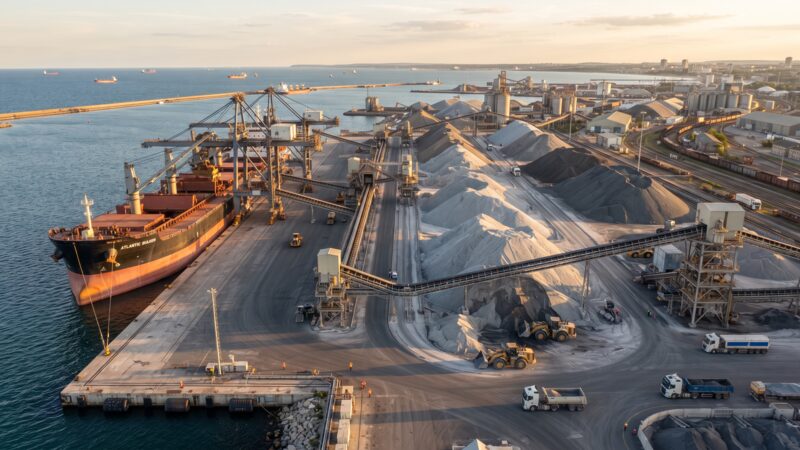
Saqr Port is one of the biggest bulk handling ports in the region, which matters enormously if your inputs arrive as rock, clinker, resin or steel coil rather than as palletised cartons. Serviced industrial land is available in plot sizes that let you expand on site instead of relocating in year four. Worker accommodation exists at scale inside the zone itself, which removes a cost and a daily logistics problem that quietly destroys margins further south.
There is also a supplier argument, and it gets underrated. If you are making building materials, packaging, plastics or food, then your raw material suppliers, your fabricators, your maintenance contractors and your freight forwarders are already up there. That shortens almost every problem you will have in your first year.
For trading companies the case is different. RAK is roughly an hour from Jebel Ali and close to the inland container depots that feed it, so you can hold stock cheaply and still serve the region's main gateway. If your business is inventory heavy and margin thin, warehouse rent per square metre is a real line in your P&L, and RAK wins that comparison comfortably.
RAKEZ is not one zone, and the choice is structural
RAKEZ was created by merging the old free trade zone with the emirate's investment authority, which is why it behaves like two organisations at once. It runs light touch business parks for consultants and traders. It also runs heavy industrial estates with land leases, environmental permits and substations. Same authority, very different worlds.
The industrial zones are not interchangeable
Al Hamra sits closer to the coast near a reasonably developed logistics and residential cluster, and it tends to suit light industry and warehousing. Al Hulaila is up near Saqr Port and RAK Maritime City, and it is built for heavy and port dependent operations, including the kind with a real environmental footprint. Al Ghail is inland, offers the largest and most affordable plots, and suits capital intensive manufacturing that needs space and power more than it needs proximity to the water.
Getting this wrong is expensive in a way that licence choices are not. You can amend a licence in a week. You cannot pick up a fabricated steel shed and a transformer and move them.
The free zone versus non free zone decision
Here is the thing about RAKEZ that most comparison articles skip: it can register both free zone companies and non free zone (onshore) companies. That single fact should shape your structure before you look at a single price list.
Note what the free zone route no longer buys you. Full foreign ownership stopped being a free zone privilege when the UAE opened up mainland ownership for most activities. So the real differences today are customs treatment, tax treatment and who you are allowed to sell to.
A free zone company gives you duty suspended imports while goods sit inside the zone, plus access to the free zone corporate tax regime. What it does not give you is the right to sell freely into the UAE domestic market. A non-free zone company can sell domestically without a distributor, but it sits outside that customs and tax treatment.
If your customers are overseas or are other businesses inside UAE free zones, the free zone route is easy. If a meaningful chunk of your revenue will come from buyers in Dubai, Sharjah or Abu Dhabi, work out how you will reach them before you incorporate, not afterwards.
Choosing a licence that matches what you actually do
Commercial and general trading
A commercial licence lets you trade within a defined set of activities, usually grouped by product family. A general trading licence is the broad one and covers a wide range of unrelated goods under a single licence. It costs more.
The common mistake is optimising for the cheaper option. Register three narrow activities to save money, then win an order for a fourth product line, and you are back at the counter amending the licence, waiting, and possibly redoing your bank compliance file. If you genuinely expect a mixed basket of goods, general trading pays for itself. If you import one category and only one, it is money you do not need to spend.
One caveat that trips up new importers constantly: the licence permits an activity, but a separate regulator permits the product. More on that below.
The industrial licence and the federal layer above it
An industrial licence covers manufacturing, processing, assembly and packaging. RAKEZ issues it, but that is only half of the picture.
Factories in the UAE also sit under the Ministry of Industry and Advanced Technology, and federal industrial registration is what gives you the benefits that make manufacturing here pay: customs duty exemptions on imported machinery, spare parts and raw materials, and eligibility for In Country Value certification.
That ICV score is worth taking seriously. It is the thing that decides whether you can compete for work with the large government linked buyers in energy, utilities and infrastructure. Plenty of manufacturers treat federal registration as paperwork to handle later, pay duty on machinery they never needed to pay duty on, and then discover they cannot bid for the contracts that justified building the plant in the first place.
Facilities, visas, and the link between them
In a UAE free zone your visa quota is a function of the space you lease. Not of your ambition, not of your business plan. Lease too small and you will stall three months in, when your first proper hiring round runs into a quota wall.
RAKEZ offers a ladder:
- A flexi Desk or shared workspace is the cheapest entry point and supports only a handful of visas. Fine for a two person trading desk that ships direct from origin to customer. Useless for anything with real staff.
- Serviced and standard offices scale the quota with floor area. This is the normal home for a trading company with sales, admin and logistics people but no physical stock in RAK.
- Warehouses usually come with an attached office, and for traders holding inventory this is the practical sweet spot. It supports a proper headcount and gives you a duty suspended storage point at the same time.
- Industrial land is leased on long terms and built out at your cost, with quota sized to the operation. This is the manufacturer's route and it brings everything in the next section with it.
- Worker accommodation is available inside the zone. For a plant of any size this decides whether your shift turns up on time or whether you are running buses from Sharjah every morning.
Work out your year three headcount, then lease for it. Upgrading mid cycle means a new lease negotiation, a licence amendment, a fresh establishment card and a queue.
The setup sequence, step by step
If you are setting up a trading company
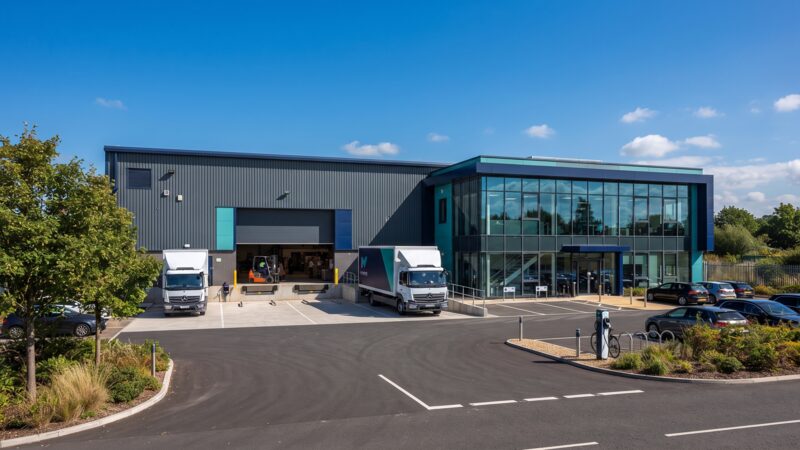
The path is quick when the paperwork is ready. Reserve the name and take initial approval. Submit shareholder and manager documents, properly attested, and if the shareholder is a company then add a board resolution and legalised corporate documents. Choose the facility and sign the lease. Pay, collect the licence, then obtain the establishment card that lets you sponsor visas. The manager's visa comes first, employees after. Alongside that, register with customs for an importer code and get your VAT position sorted.
Licence issuance is measured in days or a couple of weeks. Everything after it, banking above all, is measured in weeks or months.
If you are building a factory
An industrial setup is a construction project with a licence attached. The order matters:
- Agree the plot and lease terms with RAKEZ, including the build period and any conditions attached to plot utilisation.
- Secure the industrial licence and the initial approvals for the specific process you intend to run, not a generic description of it.
- Get environmental clearance. RAK's environmental authority grades activities by impact, and anything involving emissions, effluent, chemicals or hazardous waste attracts studies and permit conditions.
- Obtain design approvals and building permits, including civil defence sign off on fire protection, and then build.
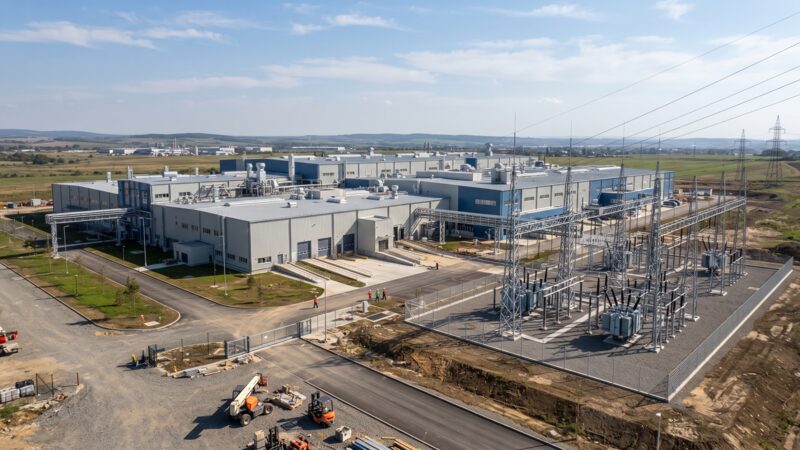
- Apply for utilities early. Industrial power loads are not switched on by request, they are engineered. If you need a dedicated substation, that lead time can be the longest single item in the schedule, longer than the construction itself.
- Complete federal industrial registration, install and commission the plant, and take final inspections.
- Hire at scale, and house them.
If there is one planning error I see repeatedly in UAE manufacturing projects, it is treating the electrical connection as a utility signup rather than a critical path engineering item. Ask about your load in the first meeting not the tenth.
The approvals that actually delay projects
Your trade licence permits a category of activity. It does not permit a specific product. Importers learn this the hard way, usually while their stock is sitting at the port.
- Regulated consumer goods such as electricals, toys, cosmetics and certain building products generally need conformity assessment and registration before they can legally be sold in the UAE market.
- Food has to be registered through the relevant municipality's food control system, and every label needs approval. Rejections over shelf life format or an additive that is not permitted here are routine, and they happen after your container lands.
- Medicines, medical devices, supplements and cosmetics fall under the health authority. Registration there runs in months, not weeks.
- Anything that transmits a signal, from routers to IoT devices to drones, needs telecom regulator type approval.
- Chemicals, precursors and dual use items attract extra clearances and, sometimes, a flat refusal.
For an industrial project the equivalent bottlenecks are site level: environmental permit conditions, civil defence, municipality building consents and a compliant arrangement for waste. None of them are difficult. All of them take time you have not budgeted.
The unglamorous advice is this. Before you sign a supply agreement or open a letter of credit, confirm the HS code the applicable standard and whether the product can be registered in the UAE at all.
Customs, VAT and the question of selling inside the UAE
Goods can enter a free zone without duty being paid. They can sit there, be stored, be repacked and be re exported without duty ever becoming due. Duty becomes payable when the goods cross into the UAE domestic market, at the standard rate applied under the GCC common tariff.
That one mechanic drives most structuring decisions.
If you are re exporting, a free zone is close to ideal. Import, hold, ship out, no duty event.
If you are selling into the UAE, you have four honest routes. Appoint a mainland distributor and let them clear the goods. Set up a mainland entity or branch alongside the free zone company. Take a non free zone licence through RAKEZ from the outset. Or clear goods into the mainland yourself and accept the duty and the compliance that follows. Each route has a margin consequence and a tax consequence. Choose deliberately, because retrofitting a distribution model is painful.
VAT adds a second layer. Certain zones hold designated zone status, which means that for goods, though not for services, they can be treated as outside the UAE in defined circumstances. This is a technical status with strict conditions on record keeping and the movement of goods and it is not a blanket exemption. Check the current status of the specific zone you are leasing in, because your supply chain treatment depends on it.
For manufacturers, the more valuable customs point runs outbound. Goods that qualify as GCC origin, broadly meaning sufficient local value addition alongside ownership requirements, can move into the other Gulf markets without duty. That is a large part of why companies manufacture here instead of importing finished goods. You are not building for a UAE market of ten million people. You are building for Saudi Arabia and the rest of the Gulf, from inside the tariff wall. Do the value addition maths before you assume you clear the threshold.
Corporate tax: zero percent is a condition not a default
The UAE has a corporate tax now, and free zone companies are inside it. What a free zone company can do is qualify for a zero rate on qualifying income, while paying the standard rate on everything that does not qualify.
The conditions are specific. You need genuine substance in the zone, meaning people, premises, expenditure and the core income generating activity actually performed there rather than a nameplate and an outsourced everything. Your income has to come from activities the rules treat as qualifying. Manufacturing and processing of goods are on that list, which is good news for industrial businesses. For traders, the relevant route is distribution of goods in or from a designated zone and it carries its own conditions, including that the goods pass through the designated zone and that you are selling to buyers who will resell or further process them rather than to end consumers. Revenue that does not qualify is capped by a de minimis test, and breaching it costs you the zero rate across the board rather than on the offending slice alone. Audited financial statements and transfer pricing documentation come with the territory.
This is the point where the cheap licence framing falls apart. A trading company selling direct to consumers in the mainland from a free zone can end up with none of the tax benefit and all of the market access restriction. Get proper tax advice, and get it before you incorporate rather than at your first filing.
Three frictions that catch new entrants
Bank accounts are the first
Licence issuance is fast, bank onboarding is not. Compliance teams want a coherent business plan, evidence of actual trade including supplier and customer names, proof of the source of funds, and a story that holds together under questioning. Vague answers and shell like structures get declined and a decline follows you to the next bank. Prepare for it as a serious exercise not a form.
Classification is the second
Duty rates, standards and registration requirements all hang off the HS code. Get it wrong and you are paying demurrage while someone argues about tariff headings. Settle classification before the first shipment.
Workforce logistics is the third and the most underestimated
Visa quota, accommodation, transport, medicals, Emirates ID and wage payment compliance are each a small process. Together, they are the reason factories miss their production start date. For a plant of any size, give this a named owner.
Where this leaves you
RAKEZ works extremely well for the businesses it was built for. Manufacturers who need land, power, port access and workers housed nearby. Traders who need affordable bonded storage within reach of the region's main gateway. It works badly for a business that has not thought carefully about where its customers sit.
The decisions that determine whether a RAKEZ project succeeds are all made before incorporation. Which zone, because you cannot move a factory. Free zone or non free zone, because that decides your access to the domestic market. Which facility, because it caps your headcount. And how your income maps onto the corporate tax rules, because the gap between zero and the standard rate is a structuring outcome rather than a marketing benefit.
The direction of travel in the UAE is fairly clear. Industrial policy is pushing towards domestic manufacturing, local value addition and export capacity and both the tax rules and the government procurement rules now reward companies with real operations over companies with a mailbox. That favours precisely the kind of business RAKEZ is set up to host. It also means the cheapest possible entry is rarely the cheapest possible outcome.
One last practical note. Fee schedules, tax guidance, product registration requirements and zone level policies all change and they have been changing quickly. Confirm the current position with RAKEZ and with a qualified advisor before you commit capital.
Frequently Asked Questions
Not without a route into the mainland. You either appoint a mainland distributor, set up a mainland entity or branch, or take a non free zone licence through RAKEZ. Goods moving from the zone into the domestic market also become liable for customs duty.
A trading licence is usually issued within days to a couple of weeks once documents are attested and in order. An industrial project is a different animal. Land, environmental approval, construction and the power connection push the realistic timeline into many months, and the power connection is often the longest item of all.
It depends entirely on headcount, because visa quota is tied to the facility you lease. A flexi desk supports only a few visas. Offices and warehouses scale the quota with floor area, and industrial land is sized to the operation.
No. It can qualify for zero percent on qualifying income if it maintains real substance, earns income from qualifying activities, stays inside the de minimis limit for non qualifying revenue, keeps audited accounts and complies with transfer pricing rules. Anything that does not qualify is taxed at the standard rate.
Choosing the licence before choosing the structure. Zone, entity type, facility and customer base need to be decided together. The businesses that pick the cheapest licence first are the ones that later pay for amendments, relocations, distributor margins and duty they never planned for.