
Most people asking this question already have two quotes open in front of them. The Ajman number is smaller. Sometimes it's half. The decision looks settled for about ten minutes, and then the awkward questions start arriving.
Will a bank actually open an account for this company? What happens at renewal, once the introductory discount is gone? If every client sits in Business Bay, how many hours a month disappear on Sheikh Mohammed Bin Zayed Road? Can I even hire four people on this package, or does the visa quota stop at two?
A licence quote answers none of that. It prices a piece of paper not a business.
Cheap and affordable are two different words. Cheap is the number on the invoice. Affordable is what your company can carry for three years while still doing the work it was set up to do. A consultant with a laptop and an importer with eleven staff and a loading bay are shopping for completely different things, and they should probably end up in different emirates.
Here is how the comparison breaks down once you get past the headline price.

Why the cheapest licence is rarely the cheapest company
Year one is priced to win you. Year two is priced to keep you. Those are not always the same number, and the gap is where a lot of "budget" setups quietly stop being budget.
Before you pay anything, ask for the renewal figure in writing, including the desk or office. A zone that is forty percent cheaper at signup and identical at renewal is not forty percent cheaper. It is cheaper once.
The other thing nobody mentions at the quote stage is what it costs to change your mind. Moving your company later means liquidation, cancelling visas, incorporating again, and opening a new bank account. That last one is the painful part and it can take weeks. I would rather pay a few thousand dirhams more at the start than run the entire exercise twice in eighteen months.

What you are actually paying for
The licence is one line on a longer invoice
A free zone package usually bundles registration, the trade licence, an immigration establishment card, and a desk you will probably never sit at. Sitting outside that bundle, and appearing later:
- The visa itself, meaning the entry permit, status change, medical, Emirates ID, and stamping, charged per person
- A security deposit per visa in some zones, refundable, but gone from your bank account for the year
- Bank account opening, plus whatever minimum balance the bank wants you to keep parked
- Bookkeeping, corporate tax registration and filing, and audited accounts if you intend to keep the zero percent treatment
- Any activity you add, any name you change, any share you transfer, each with its own fee
None of this makes free zones a bad deal. It just means the licence price is a deposit on the real number.

Where Ajman and Dubai genuinely differ
Facility rent is the honest difference. Office space, warehousing, and land in Ajman cost a fraction of what the same square footage costs in Jebel Ali, JLT, or around the airport. Nothing else in this comparison moves the needle as hard.
Licence fees differ too, though less than they used to. Dubai's budget zones have been fighting for the same customer for a few years now, and the price gap on a simple services licence has narrowed to something a lot of founders would happily pay for a Dubai address.
Per visa costs differ modestly. Deposits differ. Everything after that is either identical or close enough not to matter.

The real gap is space, not paperwork
If your business is one person, an email address, and a laptop, Ajman and Dubai are much closer than the marketing suggests. You are comparing licence fees, and licence fees have converged.
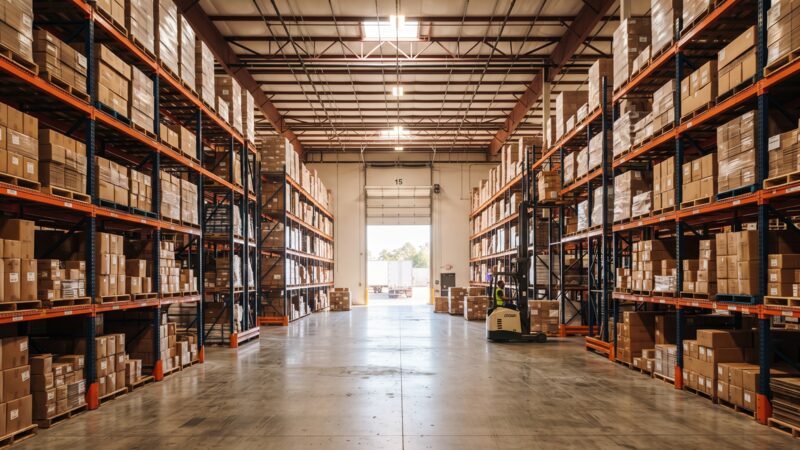
If your business needs five thousand square feet and a roller shutter, the two are not remotely close, and Ajman wins by a margin nothing else in the comparison can reverse.
There is one honest counterweight for anyone holding stock, and I wish more consultants raised it before the licence is issued. Ask where your cargo lands. Deep sea containers come through Jebel Ali. Ajman Port handles smaller vessels. If your goods arrive in Jebel Ali and get trucked north to your warehouse, you pay for that trucking and the customs handling on every consignment, forever, while the rent saving arrives once a year.
For plenty of importers the rent saving still wins comfortably. For a high volume operator running containers through Jebel Ali every week, it can evaporate. Run that number before you sign, not after.
Visas, headcount, and the quota you did not read
Visa allocation is tied to the facility you rent, not to your ambition. A flexi desk gives you a small handful. Want more people, rent more space.
This is where Ajman's rent advantage compounds. The office that buys you a bigger quota simply costs less, so growing from three staff to ten is cheaper there than almost anywhere in Dubai. If you are building a team, that is the strongest financial argument for going north, stronger than the licence fee ever was.
The argument that pulls the other way is your staff. Where do they want to live, and what will they ask for in return for the drive? If your team is already in Dubai, an Ajman office costs each of them the better part of two hours a day, and people price that into their salary expectations whether or not they say so out loud.
The cheapest package with the smallest quota is also a trap if you plan to hire. Upgrading mid term means a new facility agreement and usually a licence amendment on top.

The bills that are identical whichever emirate you choose
Corporate tax is nine percent on taxable income above AED 375,000. A free zone company can pay zero percent on qualifying income if it meets the Qualifying Free Zone Person conditions. Those conditions are federal. Ajman does not give you a better tax outcome than Dubai, and Dubai does not give you a better one than Ajman. Anyone implying otherwise is selling something.
Two of those conditions deserve attention because they cost money. You need adequate substance in the free zone, and you need audited financial statements. The flexi desk you bought because it was the cheapest line on the menu is exactly the thing that makes the substance question awkward, and the audit is an annual bill that appeared in nobody's setup quote.
VAT is the same five percent with the same thresholds in both emirates. Bookkeeping is the same work. UBO records and AML registration, where your activity requires them, are the same obligation.
Roughly half of what a small UAE company spends on compliance is federal, and no free zone can discount it. When you compare Ajman against Dubai, you are only ever comparing the other half.

The costs that never appear on a quote
Banking is the one that hurts. UAE banks look at substance, activity, and who owns the company. A trading company with a flexi desk and an overseas shareholder gets more questions than a services company with a real office in a well known Dubai zone. This is not a rule and it is not an emirate ban. It is a friction gradient, and friction costs weeks. I have watched people lose a full trading quarter to it.
Then there is how your trade licence reads to a customer. Ajman Free Zone is a real free zone with real companies in it, and for most B2C and regional B2B work nobody blinks. But if you sell enterprise services to large Dubai corporations with vendor onboarding forms, or you are raising money, someone will read that licence. Fair or not, budget for the conversation.
Distance has a price too. If your clients are in Dubai and you drive down twice a week, you are spending most of a working day a week in a car. Put a number on your hour and add it to the licence fee. For a lot of consultants, that single line flips the answer on its own.
One thing that is not a Dubai advantage, whatever anyone tells you: no free zone licence, in Ajman or Dubai, lets you sell directly into the UAE mainland. Both need a mainland branch, an agent, or a distributor. It is a cost in either column.
So which is more affordable for you?
The solo consultant or small services firm
Ajman is cheaper, and it usually stays cheaper. If your work is remote or spread across the GCC, the saving is real and there is no operational penalty attached to it. Check two things before you commit: whether your bank of choice is comfortable, and whether your clients care about the address. Most do not. Ask the ones who might.
The importer, distributor, or anyone holding stock
Ignore the licence math and do the freight math. Ajman's warehouse rates beat Dubai's by enough to absorb a lot of trucking, and for many traders that ends the discussion. If you are running heavy volumes through Jebel Ali or promising next day delivery across Dubai, work it out properly first. Also confirm designated zone status for VAT purposes if you re-export, because that affects your cash flow far more than the licence fee ever will.
The funded startup, the regulated business, or anyone selling to large Dubai clients
Do not optimise for the licence. A financial services, commodities, or crypto business needs a zone whose regulator its counterparties recognise, and no amount of saving fixes the wrong one. A company raising a round will find that investors and banks read the trade licence before they read the deck. A few thousand dirhams saved in Ajman is not worth one lost enterprise contract or a two month banking delay.

How to compare two quotes properly
- Build a three year cost, not a year one cost. Setup, renewal, renewal.
- Get the renewal price in writing, facility included.
- Count visas at your realistic year two headcount, not your year one headcount.
- Ask what the visa quota is and what it costs to raise it.
- Ask about the security deposit per visa and whether you get it back.
- Add bookkeeping and audit to both columns. It will not change the winner, but it might change whether you can afford either.
- Ask which banks are currently onboarding companies from that zone, and how long it is taking this quarter.
- If you move goods, add trucking and customs handling per consignment.
Do that on one page and the answer tends to arrive without any further argument.

The honest answer
Ajman Free Zone is cheaper. On the licence, on rent and on the cost of adding a fifth or a tenth visa, it wins, and for most small services businesses and asset heavy operations it keeps winning at renewal. That is not a marketing claim, it is arithmetic.
Dubai is more affordable for the businesses whose revenue actually depends on being in Dubai. That group is smaller than Dubai's zones would like you to think, and considerably larger than price shoppers want to admit.
What has changed is the shape of the choice. Dubai's budget zones have pulled the licence gap in, and federal corporate tax has flattened the compliance side, so the emirate on your licence buys you less advantage than it did a few years ago. The differences that survive are physical ones: rent, distance and whether the people you need will actually show up at your office. Rent does not compress the way licence fees do so I would expect the paper gap to keep narrowing while the ground level gap stays exactly where it is.
Which means the question is quietly moving away from price. Work out how your business earns its money, pick the zone that fits that then go and negotiate hard on the fee.

Frequently Asked Questions
On licence fees, usually yes, though Dubai's budget zones have narrowed that gap. On office and warehouse rent, Ajman is cheaper by a wide margin that has not narrowed at all. The bigger your physical footprint, the bigger the saving.
Yes, you can invoice Dubai clients, meet them and work with them. What you cannot do is trade directly inside the UAE mainland without a mainland branch, an agent or a distributor. That restriction applies to Dubai free zone companies too, so it is not a reason to pick one over the other.
No. Corporate tax is federal: nine percent above AED 375,000, with zero percent on qualifying income if your company meets the Qualifying Free Zone Person conditions. The emirate makes no difference. Your substance, activity, and audited accounts do.
No, but expect more scrutiny, particularly for trading activities, flexi desk setups, and non-resident shareholders. Banks weigh substance and activity more heavily than the emirate itself. Allow extra weeks in your plan and prepare a clear business profile before you apply.
Fewer than you probably need. Visa quotas are tied to the facility you rent, not the licence you buy, so entry level flexi desk packages cap out low in both emirates. Ask for the quota and the cost of increasing it before you pay, because upgrading later is more expensive than starting on the right package.