
The UAE has more than forty free zones and every one of them will happily sell you a licence by Thursday. That's the problem. Most comparisons you find online are written by someone earning a commission on the zone they recommend so the conversation collapses into price. Which zone is cheapest? Which one bundles a free visa? Which one can be done in 48 hours?
Price is the least interesting thing about a free zone.
Your licence quietly decides whether a bank will open an account for you whether you can legally invoice a customer in Deira, whether your stock clears customs or sits in a bonded warehouse racking up storage, how many people you can sponsor next year and how much corporate tax you actually pay. Choose badly and the licence fee is the smallest part of what it costs you. You lose months and you get to explain to a bank compliance officer why you're closing one company and opening another twelve weeks after incorporating.
What a free zone licence really locks in
Registering in a free zone settles four questions on your behalf, usually before you've thought to ask them.
Start with territory. A free zone company operates inside its zone and outside the UAE. Selling physical goods into the mainland counts as an import, with everything that implies. Selling services to a mainland client is routine and happens every day, though some government and semi-government contracts still ask for a mainland licence.
Then visa capacity. Your quota is tied to the space you lease, not to your ambition. A flexi-desk buys you a small number of visas. If you plan to hire six people in year two, find that out now, because upgrading a facility mid-year is slow and expensive.
Customs and VAT treatment come next. Some free zones sit on the Designated Zone list, which changes how VAT applies to goods moving in and out. Most of the popular low-cost zones don't. This matters enormously if you move product and not at all if you sell advice.
Fourth is your corporate tax position, which almost everyone has backwards. That one gets its own section below.
There's a fifth, and it never appears in a brochure: whether a bank will take you seriously.
Five questions worth answering before you look at a single price list
- Who pays your invoices, and where are they registered? Mainland UAE, another free zone, or overseas? This single answer drives your tax position and half your compliance burden.
- Do physical goods cross a border? If yes, customs and Designated Zone status matter more than anything else on the list. If no, ignore both entirely.
- How many visas will you need in year two, not year one? Quota is tied to leased space, and space is the expensive part.
- Will a bank believe your story? Contracts, a real address, a resident shareholder and turnover that matches the licence do more for you than the zone's logo.
- Do you need to be regulated, or just registered? Anyone handling client money, advising on investments or running a fund needs DIFC or ADGM. Everyone else doesn't.
The strongest free zones for consultants and professional services
Consultancies are asset light. No warehouse no customs code, no inventory. What you're buying is a licence, a residence visa a Dubai or Sharjah address on your invoices, and a bank account that opens without a fight.
IFZA and Meydan for the solo consultant who wants a Dubai licence
These two dominate the independent consultant market for good reason. Both give you a Dubai licence, both cover a broad list of consulting and advisory activities, and both are quick. Meydan runs an almost entirely digital process and suits a one person advisory or agency that needs a couple of visas. IFZA sells only through registered agents rather than direct, which means the price you're quoted has an agent's margin baked into it. Get two or three quotes for the identical package. The spread will surprise you.
DMCC when the address has to work in the room
DMCC costs more and asks more of you, and for some businesses that's the point. If you're advising enterprise clients, pitching institutional investors, or building a firm you intend to sell, a JLT address and DMCC's compliance reputation shorten conversations that would otherwise take weeks. Banks are visibly more relaxed. So are procurement teams. It's a poor choice for a freelancer testing an idea. Nobody needs to pay DMCC rates to invoice three clients a year.
SHAMS, SPC and RAKEZ at the cost-conscious end
SHAMS suits media, creative, marketing and content businesses, and it remains one of the cheaper routes to a UAE licence and visa. SPC Free Zone offers a dual licence arrangement with Sharjah's economic department, which is useful if you want mainland reach without running a second company. RAKEZ has the widest activity list of the budget zones and, unusually, a path to add warehousing or staff later without changing jurisdiction. The trade off is a Sharjah or Ras Al Khaimah address and, sometimes, a slower banking conversation. Whether that matters depends entirely on who your clients are. Nobody in Riyadh or London has ever asked me which emirate a consultant's licence was issued in.
DIFC and ADGM when regulation is the product
If you manage money, advise on investments, broker insurance, run a family office or launch a fund, this isn't a preference. It's the only lawful route. Both operate under English common law with their own courts, employment rules and data protection regimes, which is why law firms and finance houses cluster there. They're expensive, and they're worth it for the businesses that need them. For a management consultant, they're overkill.

The strongest free zones for traders moving physical goods
Here the criteria flip completely. Address prestige stops mattering. Distance to a port, warehouse rent per square foot and customs treatment start mattering a great deal.
JAFZA for containers, distribution and re-export
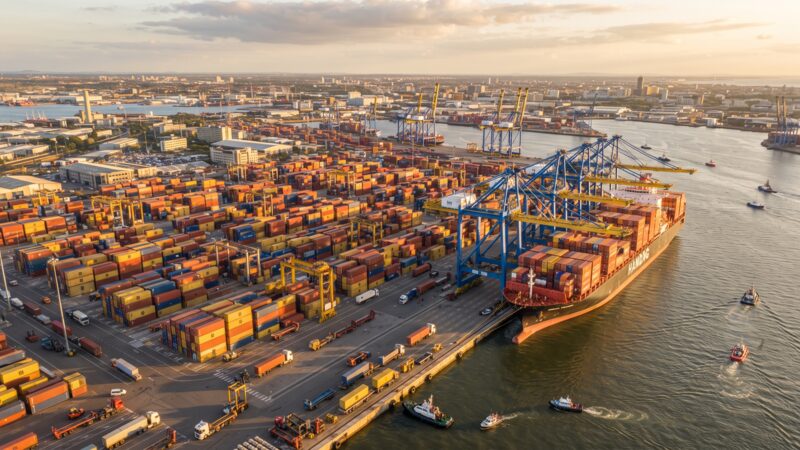
Jebel Ali is where serious trade happens, and the reason is geography. The port is next door, the zone carries Designated Zone status, and re-exporting out of the UAE attracts no customs duty. If you're moving containers, holding regional stock or distributing across the GCC, this is the default and everything else is a compromise. JAFZA asks for more paperwork and more money than a flexi-desk zone. That's fair. It's doing considerably more for you.
DAFZA and Dubai South for speed and air freight
High value, low volume, time sensitive cargo belongs near an airport. Electronics, pharmaceuticals, luxury goods, aviation spares. DAFZA sits next to Dubai International and prices accordingly. Dubai South, out near Al Maktoum, offers more space for less money and is the sensible pick if your volumes are growing and your budget isn't.
Hamriyah, SAIF, Ajman and RAKEZ for cost-efficient warehousing
Warehouse rent in the northern emirates is a fraction of Jebel Ali. These zones carry Designated Zone status, issue customs codes, and work perfectly well for light assembly, storage and regional distribution. You pay for the saving in trucking time to Jebel Ali port and, occasionally, in a longer bank onboarding. For a trader with predictable volumes and healthy margins, the maths usually still works.
The mainland import step people discover too late
A free zone company cannot simply sell goods to a customer in Dubai. Bringing product from a free zone into the mainland is an import. You need an importer of record, which means a mainland distributor, a mainland company of your own, or a customs broker acting on your behalf. Budget for 5% duty on most goods, plus whatever margin the distributor takes.
I've watched people ship a full container before anyone mentioned this to them. Sort the import path out while you're still negotiating with the supplier.
The strongest free zones for online and e-commerce businesses
E-commerce splits into two businesses that happen to share a name, and they need different zones.
If you never touch inventory
Dropshipping, digital products, SaaS, affiliate income, agency work, online courses. None of the logistics infrastructure matters to you. Meydan, IFZA and SHAMS all work. You're buying a licence with the right e-commerce or trading activity on it, a residence visa, and a bank account. What you actually need to get right is the payment stack. Gateways like Stripe, Telr, Network International and Checkout.com will ask for a trade licence whose activity matches what you're selling, a UAE corporate bank account, and a live website carrying real terms, a refund policy, a delivery policy and contact details. Applications get rejected on the website far more often than on the licence.
If you hold stock
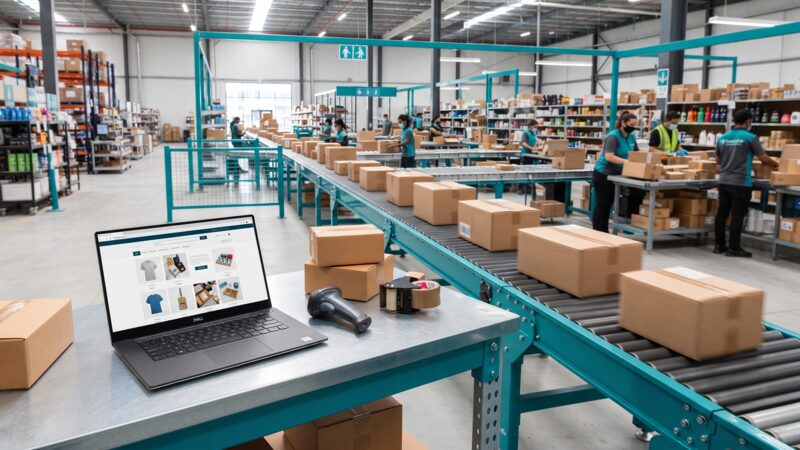
Now zone selection looks like a trader's problem, because it is one. You need a customs code, affordable storage and a workable route to your customers. RAKEZ, Ajman and the Sharjah zones do this cheaply. Dubai CommerCity was purpose built for it, with fulfilment and logistics on site, and earns its premium once volume justifies it. Selling to UAE consumers still means a mainland import. Most small sellers solve this with a third party logistics provider who acts as importer of record, which is faster than building the capability yourself and usually cheaper than it looks. Marketplaces add their own layer. Amazon.ae and noon both want a valid trade licence, and if you're stocking locally, a clean import path. Neither is impressed by a licence that doesn't permit the activity you're actually running.
Corporate tax is now the deciding factor, and most people have it backwards
The pitch you keep hearing is that free zone companies pay 0% corporate tax. Sometimes true. Usually not, for the businesses reading this.
A Qualifying Free Zone Person pays 0% on Qualifying Income and 9% on everything else. Qualifying Income comes from a defined list, and that list is narrower than the marketing suggests. It rewards manufacturing, distribution of goods in or from a Designated Zone, trading in qualifying commodities, ship operation, fund and wealth management, and headquarters or treasury services to related parties.
Look at what's missing. Management consultancy. Marketing. Software development for third party clients. Agency work. Transactions with natural persons are specifically excluded, which puts direct to consumer e-commerce outside it too.
So the consultant invoicing a Dubai mainland developer and the Shopify store shipping to a customer in Sharjah are both, in tax terms, ordinary businesses. There's a small allowance for non-qualifying revenue, the lower of 5% of total revenue or AED 5 million, and breaching it costs you Qualifying Free Zone Person status for that year and the four that follow.
The practical result: most free zone consultants and most consumer facing online sellers pay 9% on taxable income above AED 375,000, exactly as a mainland company would. What actually helps them is Small Business Relief for revenue under AED 3 million, and you can't claim that alongside Qualifying Free Zone Person status. Small Business Relief is currently legislated only for tax periods ending on or before 31 December 2026, so check where that has landed before you build a plan on it.
Two more things people miss. Every free zone company has to register for corporate tax and file a return, even at 0%. And Designated Zone status only affects goods, so a consultant based in JAFZA charges 5% VAT like everyone else.
None of this is tax advice, and the rules have already been amended more than once. Confirm your position with someone who will sign their name to it.
The mistakes that cost real money
- Buying the cheapest licence, then discovering the activity list doesn't cover what you actually do. Adding activities later costs more than getting it right on day one.
- Assuming a free zone means no tax. It means a registration, a filing, and quite possibly 9%.
- Confusing a free zone company with an offshore company. Offshore vehicles can't sponsor visas or operate inside the UAE.
- Taking a zero visa package when you need residency, then paying to upgrade three months later.
- Comparing first year promotional pricing instead of the renewal. Look at what year three costs.
- Renting office space you don't need because someone said it helps with banking. It helps a little. It costs a lot.
- Picking a free zone when a mainland licence was the honest answer, usually because the person advising you doesn't sell mainland licences.
How to build a shortlist that survives contact with reality
Start with what you sell and who pays for it, then work backwards.
Advisory work for international or free zone clients, one or two visas, Dubai address: Meydan or IFZA. Enterprise and institutional clients or a firm you plan to sell: DMCC. Regulated financial activity: DIFC or ADGM and nothing else. Creative and content businesses on a budget: SHAMS. Containers and regional distribution: JAFZA. Air freight and high value goods: DAFZA or Dubai South. Cheap warehousing with room to grow: RAKEZ, Ajman, Hamriyah or SAIF. Volume e-commerce with fulfilment: Dubai CommerCity.
Then put the real numbers side by side. Licence cost, renewal cost, visa quota, activity list, facility requirement, customs treatment. A free zone comparison beats an agent's pitch deck, because the deck is only ever showing you one zone.
Choosing for year three not month one
Free zones have spent the last few years converging on price. What still separates them is what your business does with them: how goods clear customs, how many people you can sponsor, where your tax liability lands and whether a bank finishes your file in two weeks or four months.
That last one is quietly becoming the whole game. Corporate tax filings are maturing, banks are asking harder questions and substance is turning from a talking point into something an auditor asks about. A company with an address and nothing behind it is going to find the next few years less comfortable than the last few.
Pick the zone that still makes sense when you're renewing the licence, filing a return, and somebody is checking your file. The one that looked cheapest in month one is rarely the one that holds up.
Frequently Asked Questions
For services, yes, and it happens constantly. Free zone consultants invoice mainland clients every day, though some government and semi-government contracts require a mainland licence. For physical goods, no not directly. Moving product from a free zone into the mainland is an import and requires an importer of record plus customs duty typically 5%.
Only on Qualifying Income and the qualifying list excludes most consultancy, agency work and direct to consumer e-commerce. Most free zone consultants and online sellers pay 9% above AED 375,000 of taxable income, the same as a mainland company. Small Business Relief for revenue under AED 3 million is usually the more relevant benefit, and it can't be combined with Qualifying Free Zone Person status.
The northern emirates zones, along with SHAMS and the entry level Meydan and IFZA packages, sit at the bottom of the market. Cheapest is the right answer when you're testing an idea, need one visa and sell services to overseas clients. It's the wrong answer the moment goods, staff, funding or mainland customers enter the picture.
A flexi-desk is enough for most solo consultants and asset light online businesses, and it supports a small visa quota. You need real space once you hire beyond that quota, hold stock, or run an activity the zone requires premises for. Renting an office purely to impress a bank is an expensive way to solve a problem that a decent contract and a resident shareholder solve better.
Yes, but it's rarely a transfer. In practice you liquidate one company and incorporate another, then reopen the bank account, reissue the visas and explain the change to anyone who asks. Reckon on a few months and a real cost. Far cheaper to spend a week choosing properly.